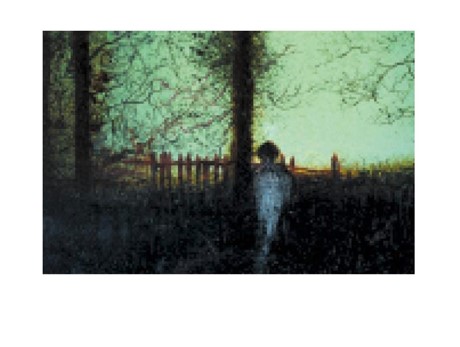
An addition to my occasional series in which I have fun reviewing old books — in this case because I’ve realised that for me, and anyone else who’s discovered real feminism or anti-racism in recent years, it’s well worth looking again at books you read years ago – it’s amazing how they change, in the light of new knowledge.
Have to admit I struggled in the early pages – the book is supposed to be sensational but the narrator has an Italian friend, who is Italian and therefore funny sigh. He meets the Fairlie sisters and oh, what a surprise – he falls for the blonde, blue eyed one and becomes very good friends with the dark, “masculine” one. Sigh, eye-roll, sigh … oh, but it is well observed.
The reader is drawn in by the struggle against inevitable disaster as the sisters descend into a horrendous trap in the shape of a marriage arrangement set up years ago by the all-powerful daddy who could do no wrong. The sister who senses the nature of the problem is far too busy being sensitive and honourable to blast it out of the water effectively.
As the story unfolds, it skillfully demonstrates the way society had set women up to fail, and how if they attempted to claim the protection of the law, they’d find the law managed by men with a dreadful tendency to put their faith in “a man’s reputation” (still true, as Hannah Gadsby pointed out), and a tendency the narrator shares of disbelieving women and servants.
I became ever more tempted to ask if Collins was really a bloke. Around 500 pages in, when the blue-eyed sister is in her most dangerous predicament, and she thinks of the housekeeper downstairs, and wonders whether to go and claim protection from “the only woman in the house”, I put down the book to go read about Wilkie Collins.
Sure enough, Collins was a bloke but I came back having discovered he led an “unconventional life” and was, it seems, far enough outside to observe the nature of racism and patriarchy – even the point Gerda Lerner introduced, that the difference between racism and sexism, the thing that makes the oppression of women so infernally difficult to identify and root out, is the depth and complexity of many women’s participation in the oppression of their loved ones.
One of the many breathtaking moments in this story comes when the dark sister does a rare and wonderful thing – she realises what she’s done. She is suddenly horror-struck by the discovery that her attempts to be perfect and civilised and above reproach led her to play her part in the creation of disaster.
Another is the way that story is told so true, despite the narrator being less than clear-sighted himself. Yes, he’s a decent and a clever chap – of course he is! – but what a terrible thing he does to the reader, when the blue-eyed one says “don’t treat me like a child!”
Why is she saying that? Because she wants to contribute to their family efforts, because she fears he would come to prefer the dark one, who plays a more active role in their endeavours (I know I did – but he didn’t!) So what does he do? He pretends he’s selling her “pale little” drawings, and gives her pennies and shillings in “profit” to contribute to the housekeeping. It gets worse, when it’s one of the Italian characters who manages to fall in love with the dark, strong-featured sister.
Interestingly, in the closing pages, the narrator states blatantly his realisation that in as far as they did solve the problems they were faced with, they succeeded “because of poverty”. He had “acted for himself”, rather than relying on the lawyer he could not afford, the lawyer who would always have erred in favour of the wealthy and the titled.
I felt a tad skeptical here, because whilst Collins proved marvellous on sexism and not as bad as I first thought on racism, I do suspect Dickens, who brought this series to the world’s notice by serialising it in his popular periodical, could have told Collins a thing or two about how often poverty itself thwarts even the cleverest of heroes.
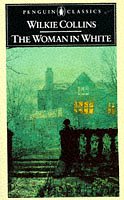
I was absorbed to the neglect of all my other occupations for over a week with The Woman In White. If you’re read it before, read it again. If you haven’t read it before – well, I’ve tried to avoid any major spoilers, and you’ve probably seen the film by now anyway. Either way – to hell with work, the laundry and Netflix, go read it now. It’s a brick to rival a Galbraith.
********************
Dear Reader,
Times are hard, and so the articles on this site are freely available but if you are able to support my work by making a donation, I am very grateful.
Cheers,
Kay
********************
 Kay Green