Don’t ask me which women’s issue this article is about…
I have written elsewhere about a “controversial” meeting that happened in my town a few weeks ago. It shouldn’t have been controversial beyond the room it took place in. If political groups want to talk to people with a range of views, whether they agree with them or not, that’s up to them – but that’s not how the world works lately is it? The controversy spread across all the local papers, and back to the national committees of the political organizations involved, and ended with the event venue announcing they weren’t going to do “politicals” any more – they just weren’t up for all the flak.
Anyway, for all the reasons all those people thought it was controversial, a few of us noted something more extraordinary. To me, one of the things that made it extraordinary was that not many people thought it extraordinary.
Along the way, the male, academic speaker opined that the “women, life, freedom” movement was no more than a US-inspired nonsense, designed to inconvenience the Iranian government. His comment didn’t seem to cause that much of a stir amongst the audience, except for a few fellow feminists who I could see looking incredulous…
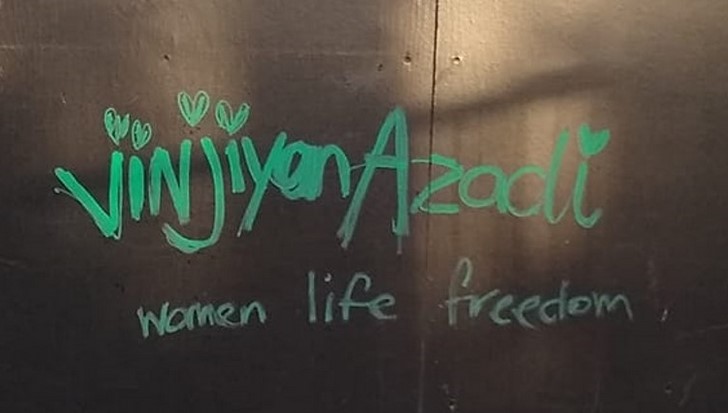
…and rightly so, as anyone who, for example, has attended FiLiA conferences will know. Yes, I know, you can get very large gatherings, global movements even, set off by some global power’s PR department but firstly, they don’t spread unless they touch on something people really feel, as those who were so upset and surprised by Trump, Brexit etc learned to their cost and secondly, we live in an extremely misogynistic society where, sadly, the men of the left have just as much trouble as the men of the right do in believing women might just have organized something important for themselves.
Occam’s Razor
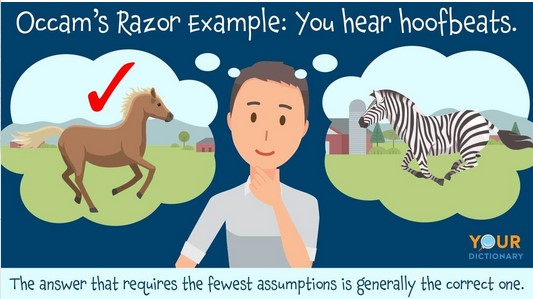
(Of course, if you happen to be in the African Savannah when you hear the hoofbeats, the zebra theory might be more likely, so let’s see…)
Sure, the USA has previous for wanting to stir up trouble but you don’t have to go far to find reasons for women protesting their treatment in countries like Iran, or anywhere else for that matter. I’d heard about “women, life, freedom” protests and events from Iranian women at conference, but after that meeting in Hastings, I went looking for someone I could talk to directly. I was soon introduced to an Iranian woman living in Hastings who had fled her country after being arrested more than once for having opinions in a public place whilst visibly being female. She told me the first Iranian women’s protest about compulsory hijab occurred in 1980, and she told me so many other things I’d never heard about before, I decided I needed to go do some reading.
A History of Modern Iran
The first thing that struck me when reading Abrahamian’s book was how little my country thought I needed to know about Iran. I can’t remember it being mentioned once in History lessons at school and, whilst I did hear about it on the news sometimes, the stories were told in a very strange way. For example, the Embassy hostage incident is covered in the book (the one in Tehran, not the one in London) and there, the causes and consequences (for Iran) were both serious and complex. By contrast, when I went to look up what UK and US coverage was still online, the story is presented almost exclusively as something that happened to some US people, that had consequences for the US presidency.
The second thing that struck me was that Iran, like many countries beyond Europe and the USA, experienced the 20th century like a particularly deadly white-water ride. Not only did that century see the part of the world that is Iran grow from a range of local and tribal peoples with no easy means of communication finding their way to statehood, but they did so in an arena where the then colonial countries constantly made decisions over their heads, and then exerted huge forces to ensure that Iran’s decisions went the way that suited them, with no regard whatsoever to the interests of Iranian people. The only way that’s changed as we go into the 21st century is that it’s mainly the USA that works in this shamelessly interventionist way, so it’s completely understandable that if something happens in Iran, Iranian people who don’t like that something are very prone to thinking “did the USA make that happen?”
But why would an English academic think that way? Why would he hear a defensive comment from his male friends at Press TV, and fail to hear tens of thousands of women shouting?
Controlling women
In the course of that 20th century white-water ride, where Iran was rocked violently by internal battles between tribal, modernist, capitalist and socialist world views, whilst struggling under destructive external demands, there are numerous startling (to me) directives from powerful, male politicians that henceforth, women will wear this or not wear that as a symbol of Iran’s whatever. There are stories of women distressed, even suicidal, when they are suddenly required to go out without their traditional coverings, of women with modern, city-based lives, outraged by requirements to “cover up” or risk arrest – and also stories of battles between rich and poor, between modern and traditional, that are all too easily expressed by frustrated young men chasing after women they see looking “wrong”.
In the face of all that, what possible point would there be in thinking an outside country provoked something like “women, life freedom”. It would be a miracle if the movement hadn’t taken root and grown in Iran. Also, supporting real women’s rights movements is completely contrary to the trajectory of that most controlling of all capitalist monsters, the USA.
Jin Jiyan Azadi
Oh and meanwhile back in the UK, I am not overly impressed by a media frenzy to bring down ONE alleged abuser, when there is a backlog of thousands “in plain sight” that need investigating, nor am I surprised by the simple minded response from some that he’s done some good stuff so he can’t have been nasty to women. Let’s keep our eye on the goal here.
Feminism is global
Yes, we want every allegation of abuse to get a fair hearing. We also want to see action against those so-called ‘trans rights activists’ who’ve been given such astonishing licence to abuse and disrupt women’s gatherings, we want urgent attention given to the Law Commissions currently trying to sneak through changes to surrogacy law that compromise women’s and children’s rights (why do MPs think surrogacy is just a gay men’s issue – don’t they know where babies come from?) and we want investigations into every media organization, business and government department that happily supports and protects abusers for as long as the money is rolling in, just throwing the odd one to the wolves when it seems necessary.
Let’s challenge the global culture that brings up, encourages and protects vast numbers of people, usually but not always men, who bully, use, abuse and at the very least wildly underestimate WOMEN.
We’ll know we’ve succeeded when we have a world in which it’s impossible for an intelligent political academic to fail to notice a global women’s movement.
Socialist internationalism
You’d think any socialist who’s done the reading and the thinking will be anti-racist and pro women’s rights, because anything more than a rudimentary understanding of capitalism and its bastard child neoliberalism, demonstrates very clearly that the divisive forces of racism, classism and sexism are the best weapons powerful nations have against people trying to unite and defend themselves.
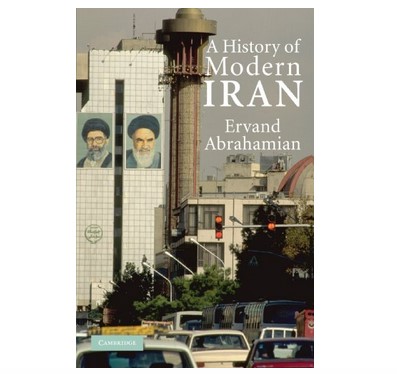
Please support the “women, life, freedom” movement. It’s integral to the socialist struggle. If any doubt remains in your mind, please go to the FiLiA blogs, or to YouTube, to find the vast amounts of information and videos now available about the movement and, if you’re as innocent as I was about how Iran became Iran, try this book – not only does it do what it says on the tin, it also sheds yet more light on what our own country has been, and continues to be, responsible for out there beyond our borders.
********************
Dear Reader,
Times are hard, and so the articles on this site are freely available but if you are able to support my work by making a donation, I am very grateful.
Cheers,
Kay
********************
 Kay Green