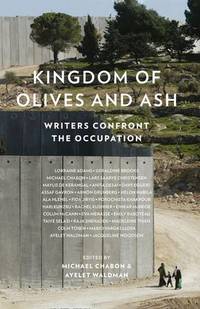
Writers confront the occupation edited by Michael Chabon and Ayelet Waldman
It’s hard to imagine what military occupation is like, if you’ve never had the misfortune to experience it. You try, and you’re never sure you’ve got there. It’s why I’ve been reading this collection put together in conjunction with Breaking the Silence, an organization of Israeli army veterans.
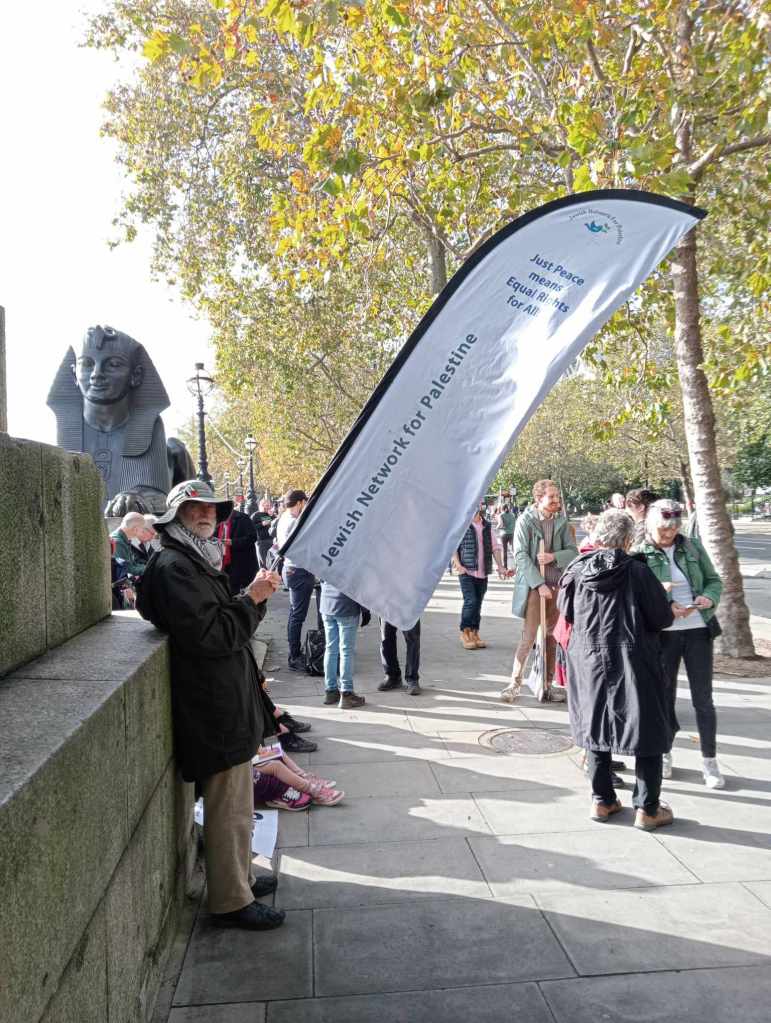
It has stories by Jewish and Muslim authors, by Israelis, Palestinians, US, UK, Irish and Spanish authors… but they all came to Israel/Palestine, and planned their pieces whilst visiting Gaza, the West Bank, Jerusalem…
It’s hard to know where to start with a review, at a time like this, with my other eye constantly on Al Jazeera. I just wanted to get this written today and to say that reading this book is a good way of spending your time between demos and email-sendings.
There’s a wide range of perspectives over 400 pages. Just now, I’m on page 256 so I’ll give you a few points from Eimear McBride’s piece which I’ve just finished reading.
A woman shows McBride a video of her son’s last moments, after being hit in the face by a tear gas cannister…
“’I don’t need your tears,’ a woman from Nabi Saleh said. … It’s certainly a hindrance, once descended into hysteria and insults on the Web, to reaching those who must, most urgently, be affected. Those people on the other side whose rejections of occupation would count, whose voices would have to be heard, who need all our encouragement to risk becoming more than the sum of their – not always unreasonable – fears.”
(I chose that quote because I’ve got into several arguments recently about the ‘taking sides’ thing. There never was a people who all had one opinion, and anyway, the majority’s opinion is rarely what we hear in the mainstream media.)
“When we were chased off our ancestral lands in forty-eight, they explain, some of us fled to Jordan but those who remained decided that, as a people, we must educate ourselves. Our level of education is a beacon to the Arab world.”
(I chose that one because we have a tendency, when we see people living in the rags and bowls and breeze blocks of poverty, displacement and oppression, to assume they are ignorant of the wider world.)
“’We’d live with them,’ they say, ‘but they won’t live with us.’”
(Because I have heard those who call for a one-state solution accused of trying to wipe out ‘the other side’.)
“But these women think Hamas has destroyed the struggle anyway, by pairing the legitimate fight for rights, justice and self-determination with fundamentalist ideology.”
(Because their supposed support for Hamas is one of the excuses people give for the mass killing of civilians. I try to think when Gaza last had a free election, and I wonder how free anything can be, in a concentration camp policed by your enemies.)
McBride describes standing with the Women in Black, who at that time had been running their street protests against the occupation for 27 years. She notes the hate directed at them by some passers by, the rape threats all women’s street actions inevitably produce, and she writes, “It reminds me of what another activist said, earlier in the day: that this visceral anger is a good sign because it means, somewhere inside, these angry people are ashamed, and that, at least, is a start.”
Alternative futures
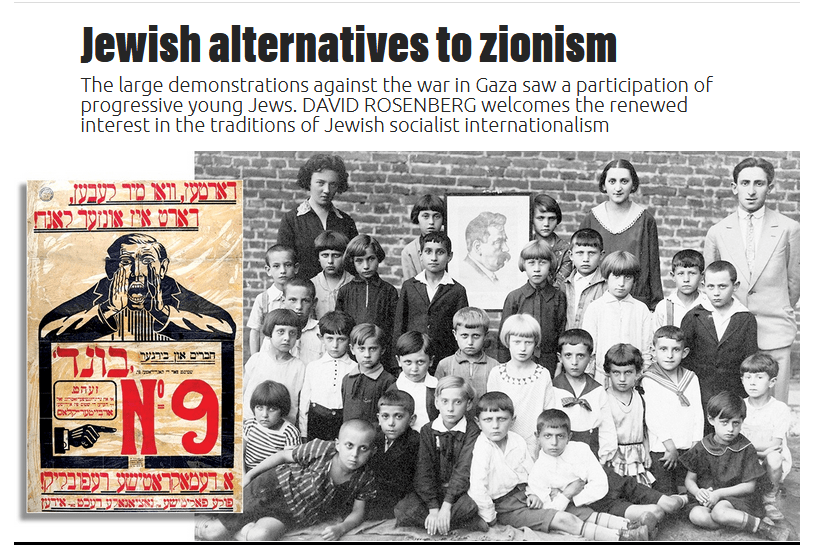
Zionism was one of the reactions to the Holocaust, but it wasn’t the only one. One of the best things this book does is remind you that there was a country here before apartheid. A country where people of every religion and none might live. Around the world, peoples have found ways to rise above seemingly overwhelming pain and divisions. Here’s another idea…
“Bundists in New York issued a statement in 1947 against partition of Palestine: “The peaceful coexistence of Jews and Arabs must be brought about by the renunciation of the Zionist goal of an independent Jewish state on the part of the Jewish community (and)…by the Arabs’ recognition of the democratic principle that a country belongs to its entire population.”
If you want to know more about life in Israel/Palestine, and some of the things the people there are thinking, please get a hold of this book.
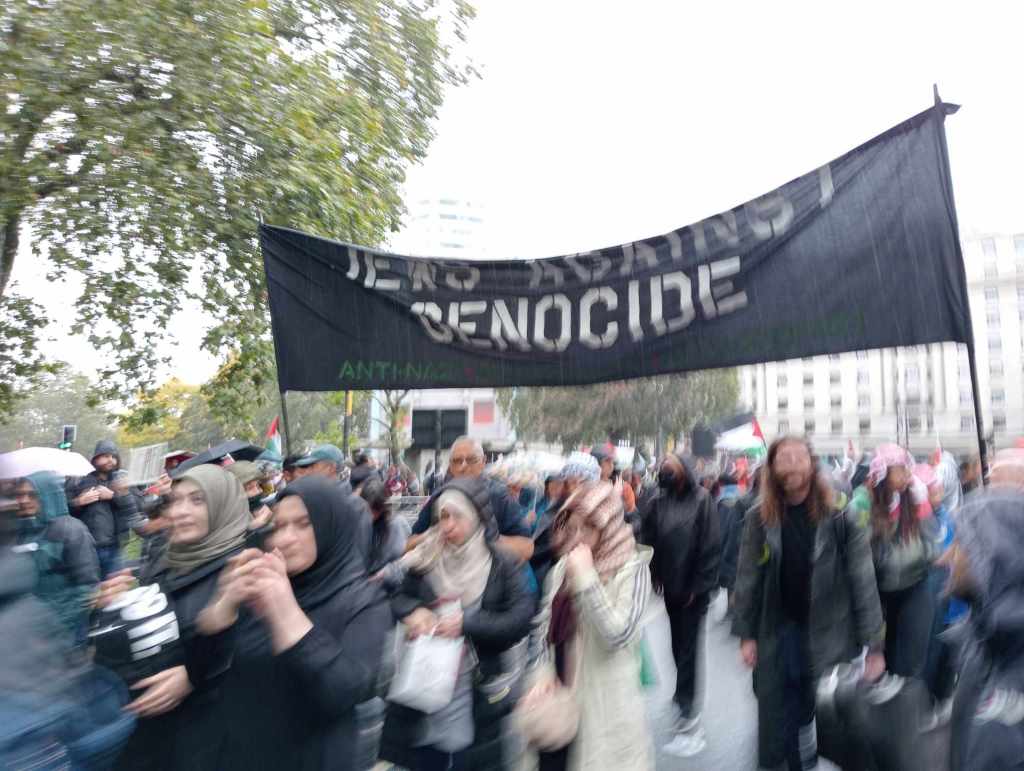
Above all, reading it has got me thinking about how we, wherever we are in the world, might help Israel/Palestine reunite, and recover from the devastations of the last 70 years. There are gatherings all over the UK at the moment, calling for ceasefire. Please join in – apart from the prime purpose of sending a firm, anti-war message to our politicians, it’s a great opportunity for different kinds of people to meet, and compare their ideas.
********************
Dear Reader,
Times are hard, and so the articles on this site are freely available but if you are able to support my work by making a donation, I am very grateful.
Cheers,
Kay
********************
 Kay Green