
I’ve used the header pic here, and the rosette collection pic below, several times before. They come from a night we in Hastings called “Rock the Vote”. It was 2017, and Red and Green activists, with a token presence from the local Lib Dem candidate, and a lot of people with no strong party affiliation, came together to hear from the Progressive Alliance, to make sure we got the Tories out.

I was a Labour Party officer at the time and according to the Party, I should have been there being extremely suspicious, because we weren’t there to plug our respective party lines. We were there to talk about what might be good for Hastings. In fact far from being suspicious, I was having a great time, and (horrors!) speaking freely. As was our candidate, Peter Chowney – a life-long socialist, and long-suffering Party member (he survived the Blair years, loved the Corbyn years but bowed out when Starmer came along).
I know what happened to the spirit of 2017. I know who set about breaking it, and I know just how hard they had to work to do so…
Splits and miseries
When people want to have a rant about the nonsense in the newspapers, they tend to point to the Sun, the Mail, maybe the Telegraph. Somehow, the Guardian always gets a free pass. Reading the Guardian is a completely unnecessary evil. You can tell precisely what’s in the Guardian by watching and listening to that part of society we used to call ‘reformers’ – that is, people who like to think they’re socialists but don’t like the idea that you may have to be a bit radical to make socialism happen. Nowadays, I think that equates with ‘centrists’ – those who think they are ‘moderate’ and ‘sensible’ because they aren’t committed too strongly to socialism, environmentalism or anything else. They present confidently as the voice of common sense, and accuse everyone else of having an ideology, as if they themselves don’t.
A few weeks back, I found myself sharing a table with a woman who writes for the Guardian. I don’t know if she knew who I was, but she didn’t seem too keen on getting involved and nor did her friends, when they arrived and showed me their backs. I found out she was a Guardian writer when another women marched across the room and started yelling, “how dare you? How fucking dare you, when women are writing their children’s names on their limbs so they’ll know when they’ve been blown to bits!”
She did not reply, merely attempted the ‘withering look’ defence, but the woman behind me explained into my ear, “she writes for the Guardian.”
That told me the whole story. It’s much quicker than having to read rubbish newspapers. According to this article in the New Left Review, those ‘sensible’ writers are currently begging the Labour Party to say nice things so they can write about Labour in an election-winning way.

Sonia Sodha, writing in the Guardian called people like me ‘cranks’ and Janice Turner in the Guardian called us ‘parasitic worms’. When I say people like me, I mean ‘the left’ and from a Labour Party point of view, ‘the disaffected’. Sonia and Janice are examples of the ‘lesser evil’ people, who want us to be persuaded to vote Labour, whilst calling us everything under the sun – and yet they deem themselves unbiased, and free from tribalism.
There are a lot of us, and they aren’t doing a very good job of persuading us that we should vote for the party that they lied themselves blue in the face to steal back from us a few years ago, the party that has now, six months into Armageddon, admitted that what Israel is doing in Gaza really is not tolerable.
Amongst feminists, Janice Turner and Sonia Sodha were our allies during the battle to defend women’s legal rights. It took some careful handling, but it’s always like that in women’s politics. The issues we address affect women of all political stripes so, when push comes to shove, we need to be able to get along, and we did, despite – for example – the behaviour of the ‘sensible’ during the Corbyn years — but October 7th has put an end to all that for now.
The only lefty feminist women I know who are still in the Labour Party are a group who braced themselves when Starmer took the leadership, and resolved to stay put and hold the line for women on the grounds that Labour would probably be the next government, so we needed someone in there to make sure Labour didn’t wander straight back into corporate-inspired self-ID territory. It didn’t work.
You can see where Labour is at on the subject of how easy it should be for men to sign themselves into women’s spaces, sports and services by keeping an eye on Anneliese Dodds’ tweets. Like the rest of Starmer’s Labour, she changes tack with the winds. You can read about her latest line here….

JT’s weekly report via Graham Linehan’s substack
For those who’ve only recently picked up on the ‘sex and gender’ issue, there were two main strands to women’s campaign. The first was to challenge the situation in schools where groups like Stonewall and Mermaids were paid to give ‘training’ on sex and gender to both staff and students, and were effectively there as gender-ideology evangelists, drawing more and more children into the idea that they could – in fact, that they might need to, ‘change sex’. Labour’s Wes Streeting was a big part of this project. I suspect he saw it, as he sees most things, as a way of opening public services to contracted-in profiteers but he’s now rescinded on that, as most Labour politicians have, since the Cass Report blew the lid off the situation.
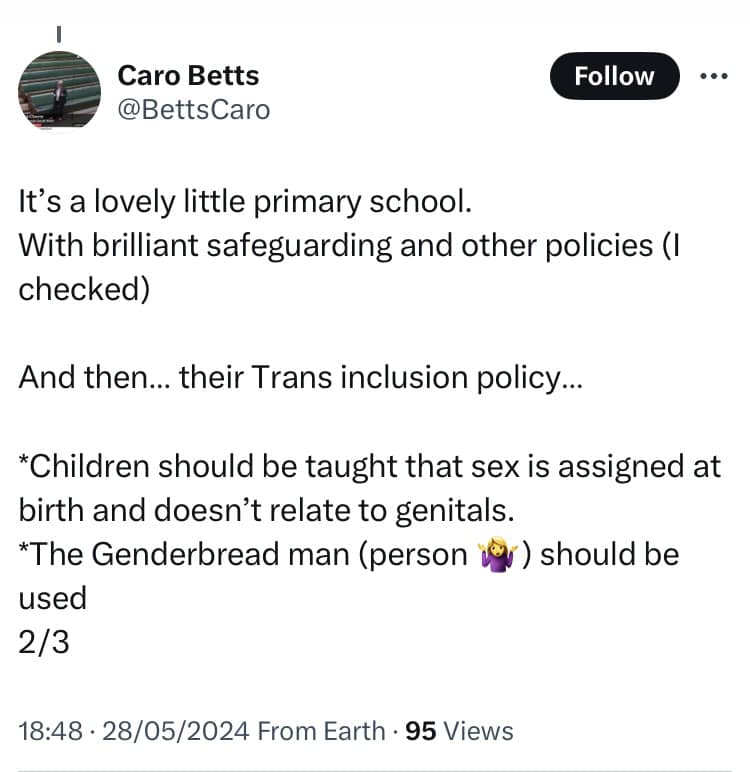
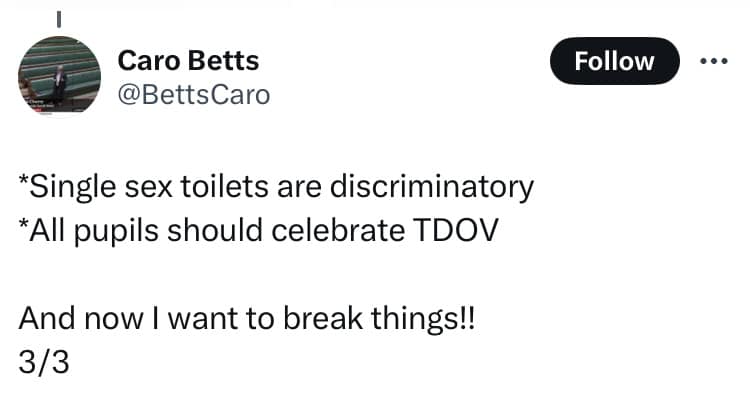


The other strand of the campaign was to oppose ‘self-ID’. By whatever name, by whatever means, it is the practice of allowing males access to women’s sports, spaces and services on their say-so. People think it’s progressive, or ‘being kind’, when it’s presented as inclusion for trans women but it’s also an entry ticket for abusers and cheats.
So, in short, the women who stayed in Labour to prevent that happening have, sadly, wasted their time. It seems very clear to me that, just like the Tories, Labour will always bend, twist and weave their policies to suit whoever is offering their MPs money.
Personally, I have come to the conclusion that the divisions and struggles we face are caused to a great extent by the very existence of party politics. That’s why I’m very interested in the UK getting as many independents into Westminster as we can this election time.
Without party politics, we would need to find a way of applying direct democracy – of MPs being instructed by people’s needs, rather than what happens now, which is MPs bending their messages so that they can do what their sponsors want, but present it as something that SOUNDS LIKE what people are asking for.
I’d like to illustrate that in the light of those two big issues I’ve been discussing, and in relation to independent, especially ex-Labour, General Election candidates.
Mass murder in Palestine
If you’re not clear on how we got where we are with regard to Israel / Palestine, the best thing to do is look into US strategy, because most sitting UK MPs are trying to conform to that. Trouble is, the US have got into a disastrous mess with their Israel policy. Here’s a good analysis from a US point of view….
… Very illuminating, but most people’s opinions about what’s going on in Gaza have absolutely nothing to do with either the US’s preferred position in world politics or with how and why our politicians wish to reflect US views. Most people’s opinion about what’s going on in Gaza is simply, passionately and irrevocably “STOP KILLING KIDS!” People don’t like war, especially in its modern, arms-industry friendly sense of heavy weaponry versus civilians. It would be easy to unite almost the whole population around “let’s stop Israel killing kids” if it wasn’t for the fact that our Westminster parties are in hock to the arms industry and/or dependent on US approval, and so had to wait six months for permission to say they think the extensive murder of children is wrong.
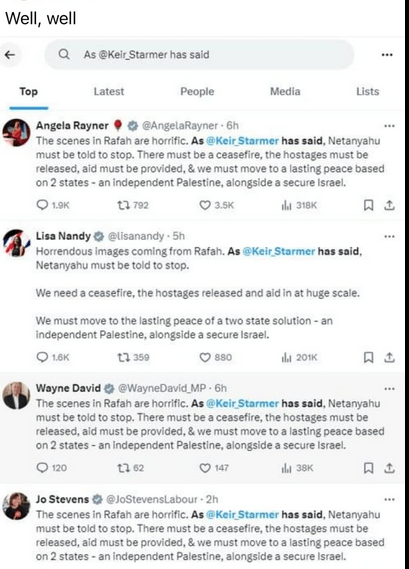
Now there is an election of course, those politicians will be doing their very best to produce a ‘safe’ echo of what people think, so they appear in agreement with us, hence Starmer’s ‘innocent bystander’ pose with that “Netanyahu should be told to stop” line.
That, along with the fact that all his MPs became suddenly horrified this week, after six months of carnage in Gaza, suggests to me that this belated attempt of Starmer’s to be ‘just like us’ is not going to work but – we’ll see.
Meanwhile on the Tory side, Rishi Sunak has come up with if anything a more astonishing strategy. Suddenly, he favours bringing back national service. Not only does this not fit with his previous line on anything but he must know, as we all do, that most youngsters do not want to join the army, that most parents very definitely don’t want them to, and above all, that the last thing the UK forces need right now is a mob of untrained and unwilling squaddies to deal with.

So why did Sunak make such an extraordinary statement? Because it’s a traditional Tory response to scenes of campus protests and anti-war marches. He knows it won’t help and he knows it won’t happen, but it’s a way of waking up the old Tory vote, and showing them something that looks reassuringly like old fashioned Conservative thinking.
And on the periphery of all that the Green Party, whose exec have spent most of their energy in recent years fighting identity-politics driven wars against its own members, and making enemies of women in councils up and down the land, are suddenly really passionate about Palestine and, according to the local candidate where I live, in favour of a two-state solution – not because they have any idea how to make that shoddy, empire-in-retreat policy work, but because it sounds frightfully reasonable and appropriate for the hustings.
That is how badly party politics warps our world.
The sex and gender issue
Similarly, MPs and lobbyists have done a very effective job of making the trans issues look like a huge and passionate divide in our society, mainly as part of their strategy to win “the young” and “the progressive” to their own political sides. Yesterday, on social media, I saw an illuminating example of how this divide was achieved…
In a group where half a dozen pro-self-ID zealots habitually slam down any other commenters, I said that their views did not match those of the public at large.
One reply ran…
…how are voices in this group at a variance from those of most people? Surveys have shown that the majority of people are in support of the trans community. A majority of Britons believe that people should be able to change the gender they socially identify as, with 55% saying “people should be able to identify as being of a different gender to the one they had recorded at birth.
…and there is the party-political campaigners’ trick in a nutshell. The poll questions that produced those stats were designed to bring in a result that suggests people support self-ID – but people on my side of the debate would ask questions such as “do you want to make it easier for sex-offenders to access women’s prisons and refuges?” or “Should alienated children be encouraged to consider a sex-change?”
But there are worse problems embedded in that little list of stats. Firstly, it builds in the assumption that those of us who campaign against ‘self-ID’ are against ‘the trans community’ and secondly, the final statement in the comment would have come from a question saying something like,”Do you think people should be able to identify with a different gender to the one they had recorded at birth?” This question pre-supposes that gender (a notion based on sex stereotypes) is what is recorded at birth, and suggests that we are discussing whether, for example, girls should be allowed to grow up to be footballers, or boys to wear dresses and make up – a question to which most sane people would reply “yes.”
It’s known as push-polling – the practice of designing poll questions that, far from seeking others’ opinions, lead responders to give certain answers. Political campaigners do it all the time to create the divisions they need in order to win people over, so that they’ll passionately support this party not that one, when what we as a people need is the chance to come together, talk more, listen more, and find out exactly what our common needs are.
The candidate versus the party
And finally, what happens when a party decides to reject a sitting MP or, conversely, when an MP leaves the party they had been a member of? The most famous example in the extensive and popular list of independent candidates standing this year is of course Jeremy Corbyn. He has been the MP for Islington North for more than 40 years and, like his colleague Diane Abbott in a nearby constituency, remains locally active and popular, despite the party rejecting him.
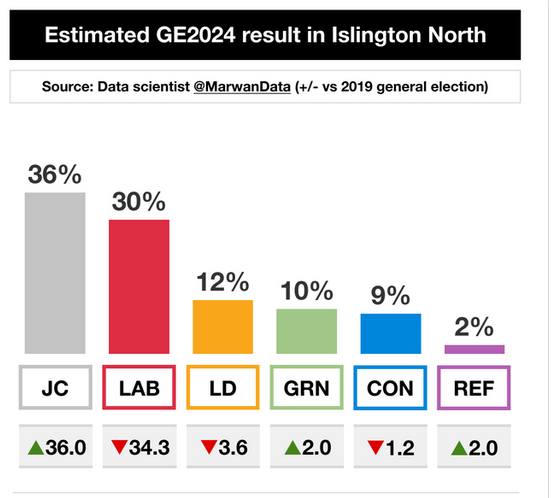
Polls so far suggest this has created a deep divide in North Islington. The Labour Party, far from doing anything useful to heal that divide will likely spend the next month doing everything in their power to make it worse, in the hope of pulling Corbyn’s supporters into their own camp. What matters to them is not the people getting what they want, but how to lead people into voting for what The Party wants.
That is about the clearest example I can think of of party politics actively harming people and communities, of it being the source of that polarization and intolerance everyone complains of. Let’s be done with it. There’s a group in Hastings now who, like many people across the country, are busy trying to figure out how to promote what people actually want — and to me, that entails finding out what life after party politics might be like.
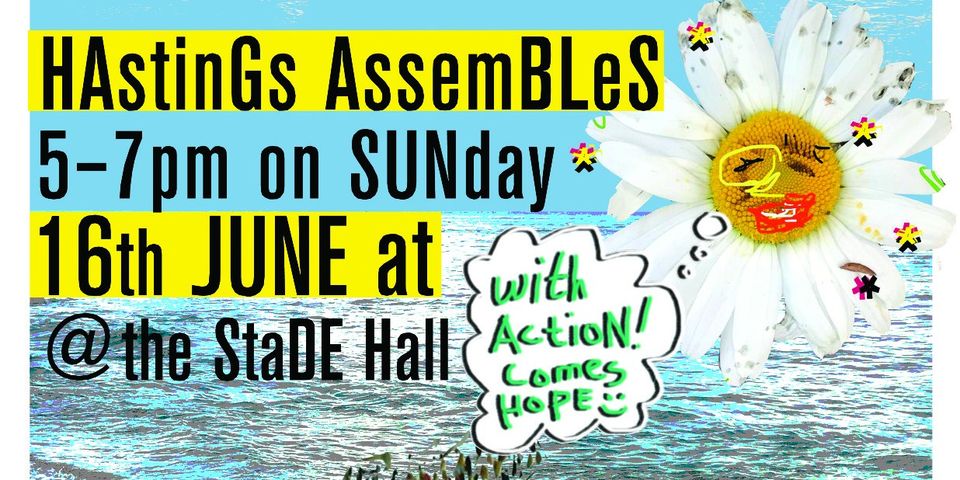
If you’d like your voice, your needs to be a part of the assembly in Hastings, come along to The Stade on the 16th.
********************
Dear Reader,
Times are hard, and so the articles on this site are freely available but if you are able to support my work by making a donation, I am very grateful.
Cheers,
Kay
********************
 Kay Green