At the end of November 2024, Women’s Place UK officially drew the final curtain. It was logical. The founders set up WPUK because the new-fangled, ill-defined concept of ‘gender identity’ was being mooted as justification for allowing males to self-identify into women’s spaces and services, and the call from some women’s groups for impact assessments, discussions, definitions, were being written off as ‘bigotry’. Meanwhile, many women went about their lives without any knowledge of the extent or the consequences of the changes in practice that were being made, often “ahead of” (ie, against) the law. Changes made without people’s knowledge are neither safe nor fair. The purpose of WPUK was to protect and nurture the necessary public debate. They succeeded in as much as the debate is everywhere, now, but they were aiming for a respectful debate, on the left.
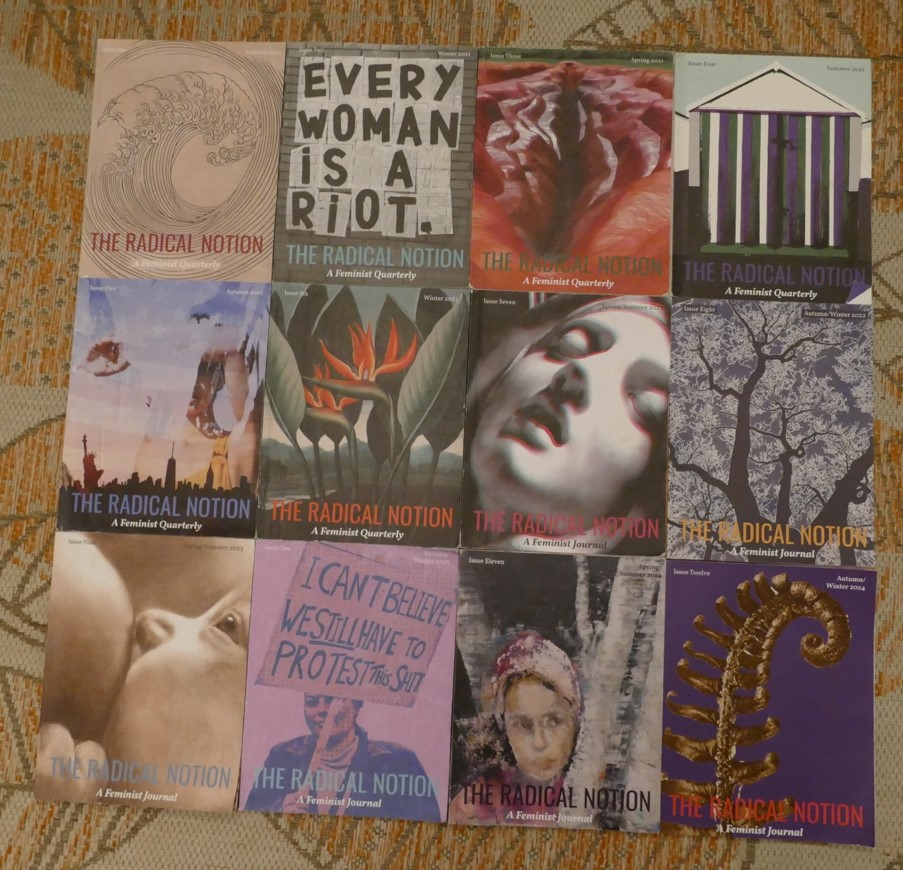
In the run up to Christmas, the final edition of The Radical Notion, ‘the bookend edition’, hit our doormats. Those 12 issues, published over four years, became the journal of a movement. True, many ‘gender critical’ campaigners were not feminist or socialist. They just wanted to defend women’s legal rights, and safeguard youngsters from the abuses ‘gender identity’ opens the door to, and that’s fair enough; people must be given a chance to understand and have a say in changes that affect them. But many of us saw a larger mission to accomplish. Stonewall’s ‘transwomen are women’ campaign seemed to us to be the spearhead of a rising tide of sexism and misogyny we’d been witnessing ever since #metoo – a surge which included horrendous developments in the ‘sex industry’, in trafficking and surrogacy – all of them issues the left often seems determined to misunderstand. We needed to revive proper feminism (I don’t say ‘gender critical feminism’, because that’s either a misnomer or a tautology, depending how you define it) and that required a lot of thinking and re-learning. The Radical Notion became our handbook.
Then just before they all packed up for Christmas, in a move typical of the actions we’ve seen from the Labour Party on the issues of sex and gender, Annaliese Dodds threw a googly – yet another inappropriate, ill-defined, inapplicable statement that proved nothing except that MPs generally don’t have a clue how Equality law works or what It’s for. And with that statement, Labour’s last remaining promise (to protect single sex spaces) was broken.

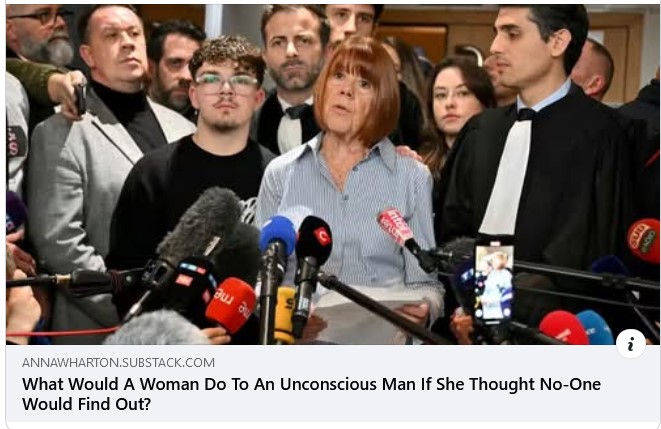
The combined impact of those events would leave lefty feminists out on our own and back where we started if it wasn’t for the huge up-swell in feminist activity of the last decade, which WPUK and TRN were such a vital part of. They, and the various groups and conferences that have come together, have given so many of us a good grounding in feminist theory and activism, not to mention a network of courageous sisters to call upon when trouble arises.
FiLiA, for example. The roving conference that works ‘to amplify women’s voices’ wherever it goes. Click here to see FiLiA’s latest campaign.
So, where exactly does that leave a lefty feminist activist, as we say goodbye to 2024?
Solidarity v Sisterhood
For me, all those issues exploded into a state of intolerable conflict around 2018 when I had one foot in the Corbyn movement and the other in what many were then calling Fourth Wave Feminism, but… Mixed metaphor alert! … those two horses were galloping off in different directions, and I really did not want to abandon either of them, so…
Solidarity
Herd instinct? We’re not herd animals though, are we?
My first taste of party politics had been a decade or so back, when I joined the Green Party because the BBC’s excuse for giving Nigel Farage a party election broadcast was that his then party had more members than the Green Party. Well, 60 000 other people had the same idea I did. We joined in the same week, and we won a party election broadcast for the Green Party but we weren’t consciously acting together.
I didn’t stay long – partly because the Green Party in my town seemed to be a scattering of individuals, each trying to pull the Party their own way, so nothing worked; but l moved on mainly because the Labour Party, after catching our attention by electing the right Miliband brother, then trumped that wonder by putting a real socialist in the next leadership contest.
To understand what a big deal that was, you need to be aware of the parlous state of our government – indeed of the entire political and business world, to be aware of how pointless it is to weigh up this or that politician as presented to you on the telly. For all his faults (I didn’t think he was perfect. Few lefties did), Corbyn’s track record showed that he was a consistent, dependable voice against violence and war, against corporate theft, against the breaking down of democracy and human rights.
Those who weren’t aware of how dangerously captured our government and media were wasted so much time weighing up whether they ‘liked’ Corbyn or not, and accusing excited campaigners of being ‘besotted’.

Those who got it, joined the Party and started pushing for a Corbyn-led government as though their lives depended on it, because they saw that their kids’ and their grand-kids’ lives did. It was in this newly vibrant Labour Party that I learned practical solidarity. It was pretty much the opposite of the Green Party. Our Labour Party was full of specialists: NHS campaigners, environmental activists, Free Palestine groups, women’s and BAME groups, to name a few – and all the Trade Unions with their own trade-specific issues – but we circulated campaigns and event materials, and we all stood together wherever numbers were needed to back those campaigns. That’s how, and why, solidarity works.
At least it did at our end of the Party – the Corbyn end – the part that grew the Party to half a million strong, with many more supporters who’d join us on the big demos. That’s solidarity in action.
But then Brexit happened. Corbyn was a Party loyalist and a fervent believer in both democracy and solidarity. He wasn’t hesitant, doubtful or wrong about Brexit but he thought healing that vicious split in the Party was more important than being in or out of the EU.
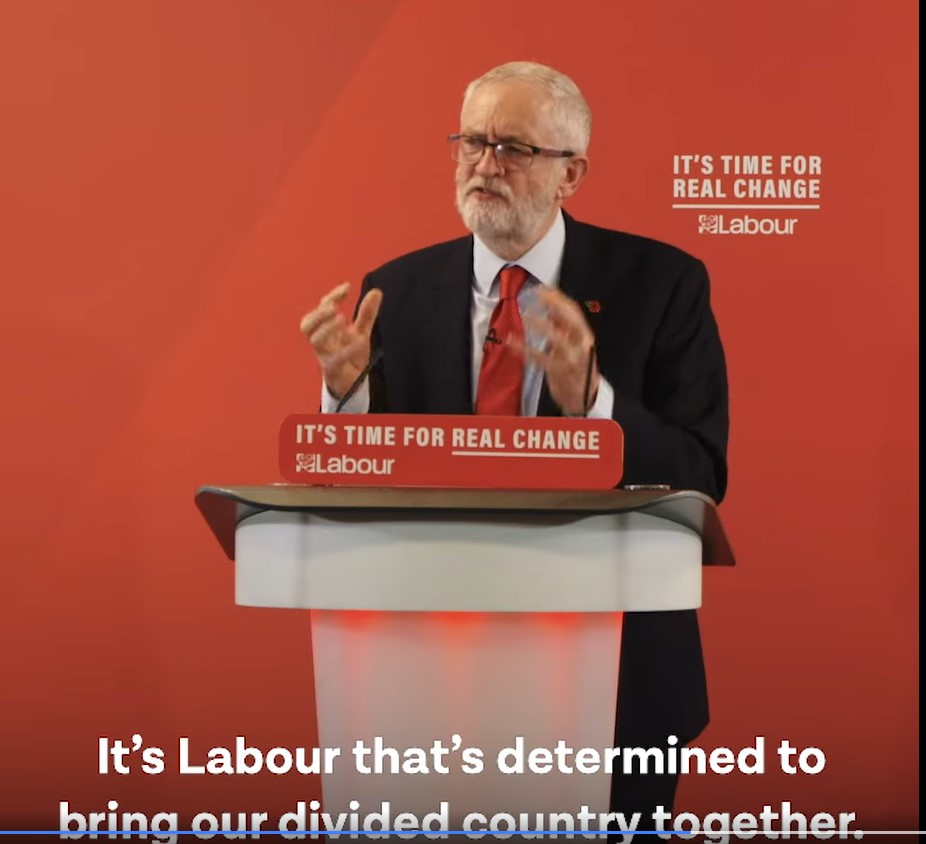
But then the ‘trans rights’ thing happened. The women in the Party who noticed the problem divided into ‘trans allies’ and ‘terfs’. On the whole, the men ignored the division, took ‘trans rights’ as gay lib 2 and supported ‘self-ID’. Corbyn did notice it was causing grief and he did try to stop trans rights activists bullying women, but with nothing like the energy he put into trying to solve the Brexit rift.

In fact, there’s no point in asking a high profile politician to make a big, decisive speech on a highly volatile issue. For one thing, people on the other side of the rift will be asking them the same thing and for another, any politician with an ounce of sense will know that when a divide is that emotive, no-one is going to be brought around by one big speech. It needs time, a lot of small scale conversations, and more information.
I suspect neither Corbyn nor the majority of the members realised just how much female energy and activism drained away from the Party over the trans rights / women’s rights issue, or how much it mattered. I did my best, for quite a while. I still went along to support everyone’s campaigns – even those who’d been calling me a ‘terf’, a ‘bigot’ and all the rest of it – but the joy had gone. I felt unwelcome, I looked for chances to break the silence. There weren’t any. I was tolerated so long as I didn’t talk feminism.

Lately, I’ve been working on a project to produce a UK edition of Marilyn Garson’s Jewish not Zionist, and I was taken by a comment she quotes from a member of her Alternative Jewish Voices group, who is of the opinion that however wide and deep the divide amongst Jewish people gets over Zionism, the only way to address it is through personal conversations. I found the same with the more passionate divides in Labour – I spent large amounts of time emailing people who’d said something interesting and saying ‘how about a coffee in…’ naming a town halfway between our homes, however distant that may be. (I do it now, when I spot chances to constructively discuss the divides in feminism.)
Where does that leave solidarity?
Are all those coffee-meets ‘sisterhood’?
It was more a relief than a blow when Starmer’s Labour finally proved to me that there was no point in keeping my Party card. By then, I’d found FiLiA and was learning ‘real feminism’, which felt to me an awful lot like international socialism. I was puzzled though by meeting women who called themselves ‘socialist’ or ‘left wing’ but had had little or no interest in the Corbyn-led Labour Party. In fact, many seemed to understand its relevance as little as your average socialist understands real feminism.
Women need socialism
When I was asked to do some work on socialism for FiLiA, I wrote my little bio on the end of the event invites and things thusly: ‘an environmentalist among socialists, a socialist among feminists and a feminist among environmentalists. Would like a quiet life’ — or something like that. I didn’t mention Brexit – you can only carry a joke so far.
I felt as though I was working blind. Just as your average gender-ideology believer will say ‘oh yes, I’m a feminist’, your average feminist will say ‘oh yes, I’m left-wing’. They are internationalists, who’ve been all-but silent on Palestine these last two years. I try to get it, I really do.
Puzzles
- Socialists have not noticed the severity or the causes of the violence against women everywhere?
- Remainers didn’t know what they were doing to the national Labour vote when they called for that second referendum?
- Feminists have not noticed that the corporate, US-led unravelling of our world is currently blazing away towards our irrevocable destruction in Israel / Palestine?
That can’t be right! … but it’s what I thought, and I reached a stage I could not abide either lefty or feminist meetings. I felt bullied by what was going unsaid, and started backing away from it all. It’s what we do when we feel a repeat of previous traumas coming on. Either that or throw an epic tantrum. I began to dread feminist meetings in particular because I felt a resurgence of the blood-pressure inducing, enforced silence the Labour Party used to apply to the women’s rights situation. Trouble is, the women imposing that silence were doing so from the exact same trauma-alert – either because they believed in the left-antisemitism slander or they feared discussing Palestine would provoke a re-run of the divide that decimated the Second Wave. It wasn’t the same, but it felt the same.
In fact, some women’s groups were steering really carefully, trying to deal with the various trauma-responses, to get to a place we could discuss those painful divides but, for lefties like me, there was nothing – nothing – so pressing as the need to rally all our groups and resources for Palestine, to push governments into action BEFORE an entire people was destroyed, and the world plunged further into environmental and political disaster.
Why am I always on the side that gets to sit on their stress while some other group gets gentled along…? (I thought). That part was exactly what had happened while Corbyn tried to placate the antisemitism claimers, then the Brexit/Remain ranters, then the trans rights campaigners.
To me, that strategy can never work. Organizations end up being ruled by DARVO and once their focus is on those vexacious complainants, they fail to notice membership and active support draining away from the other side, and here we are. Just as the Corbyn movement never acknowledged the loss of so many women, now the women’s groups appear to be unaware of the drifting away of socialist women (who are currently far too busy campaigning to end the genocide to even notice that their ties to feminism are withering.)
“A unanimous public opinion tends to eliminate bodily those who differ, for mass unanimity is not the result of agreement but an expression of fanaticism and hysteria” — Richard J. Bernstein
Solidarity with rows
Can you do solidarity without stifling dissent? Didn’t the Second Wave women just set to and have those rows until everyone was so bawled out they actually started listening to each other? Was that really a disaster, or was it just the wave breaking? (It’s what waves do…) Perhaps that’s the resolution for 2025 – solidarity – or sisterhood – with rows.
At least that’s where my thinking was when the final edition of The Radical Notion arrived. Then, as has happened with each new issue that arrived, I started reading, started learning, started thinking. This is what I read/learned/thunk…
The other left?
I learned that radical feminism’s left is not the same left as the one I had been operating in. To those women, it is not enough to move the means of production into socialist hands and carry on in the same manner, nodding to anti-racism but, for example, failing to even notice a direct threat to women’s basic legal rights. Corbyn was not a source of hope to them – just another variety of wrong.
Disgust
I finally read a plausible explanation of the ridiculous level of conversation-stopping bile that some political issues generate. Zionism v free Palestine; Leave or Remain; welcome refugees or barricade our country against ‘the other’, self-ID v women’s rights…
From Jane Clare Jones’ analysis I learned that all those issues should be discussable, negotiable and resolvable, and would be, if we had a rational, materialist politics – but we don’t, we have a politics based on emotional attachment v instinctive revulsion.
- Most Remainers did not debate or attempt to persuade, they were far too full of disgust for ‘ignorant gammons’ who, already feeling threatened by all the problems of austerity and service failure, reacted in reciprocal frustration and disgust, wanting to break the system that was breaking them.
- Zionists could not do the listening and thinking to work out why what was a dream of sacred refuge to them was a nightmare of cruelty and oppression to us, they could not listen because they were emotionally attached to Israel and had learned to see Palestinians and all their supporters as disgusting, antisemitic savages.
- When the self-ID issue heated up, women who hadn’t thought through why we need women’s legal rights, or how to defend them in debate, merely amplified conservative thinkers’ disgust towards ‘autogynophilic’ males and by return, most socialists over-extended and saw all women’s rights campaigners as the equivalent of the last century’s homophobes and reacted with violent disgust.
It’s ‘I am being attacked’ and ‘I am being poisoned’. It’s instinctive, it’s visceral, it does not hear reason or tolerate an outstretched hand. When we’re acting out of those drives, a contrary argument, however convincingly put, falls on our ears as weasel words that criminally seem to undermine what we’re sure must be true, even if we can’t explain it.
No debate, no solidarity, no sisterhood.
- Remain v Leave had nothing to do with a discussion of the pros and cons of the UK being a part of the trade agreement that is the EU.
- Zionism is not the same as Judaism is not the same as being Jewish – and none of those words necessarily have anything to do with being Israeli or Palestinian. You don’t need to understand any of those things to want to stop a genocide but how do you argue against emotionally held beliefs and practices that mean nothing to you?
- As for the trans thing – it is frankly impossible for any political conversations on that topic to make sense without first agreeing definitions of ‘trans’, of ‘gender’, of ‘intersex’ and of so many other words that get flung to and fro in rows on that subject – if only – if ONLY the MPs who drew up the GRA had bothered to work out definitions of those things before they wrote the laws that provoked the passionate rows.
– and as for what people mean by ‘left’, ‘right’ and ‘feminist’ – and how about ‘British’, and ‘European’? (There was a geography teacher in my Labour Party branch. Throughout the painful months of Brexit debates, her voice could be heard, insisting “we are not leaving Europe. That would be impossible, we are merely leaving the EU!”)
None of those things were ready for political debate. They are all labels for things people get worked up about when they’ve been traumatized by something. I can imagine a feminist consciousness raising group sorting some of them out over time – but an oppositional, two-sided debate, with a vote at the end? No way.
Talk it through

Well, that’s it I guess. Where politicians need a firm push, and you know enough people are in agreement, go for the big rallies, the petitions, the debates and motions. For the rest of it, keep on with those one-to-one conversations, and hope that others will do the same, and that each conversation will seed some more conversations, until enough disgusted people manage to calm down, get curious and start thinking.
It’s not a waste of time, however urgent the issue you want to address, if it’s the only strategy that can work. Come to think of it, that’s precisely what the Labour Roots tour was trying to achieve when the movement was interrupted by the 2019 election. No wonder Starmer’s government doesn’t want to talk with the membership.
The women’s groups were quite right when they delayed declaring their organizations on this side or that in the battle between Zionists and anti-apartheid, anti-militarist socialists. If they had forced the issue on a vote, sisterhood would have crumbled in a mass of rows, just as the solidarity of the Corbyn movement did when team Starmer weaponized the Brexit divide, forcing a conference vote on a second referendum.
We don’t need formal, competitive debates and win-or-lose votes on those visceral, emotionally held positions. We need solidarity, but we also need sisterhood – personal conversations that people bring their whole selves to, with a desire not to win, but to understand, and unite.
Well, here’s to 2025. May we build solidarity and sisterhood, and apply the best of both kinds of left to these primal problems that turn our politics into a red mist. If you’ve read this far, please think of someone who interests you, but maybe doesn’t entirely agree with you – or someone who knows things you don’t, or has been to places you haven’t, or vice versa — someone you fancy talking to over a coffee, on the grounds that you both might learn something — and send them an invite. Go on, do it now!
********************
Dear Reader,
Times are hard, and so the articles on this site are freely available but if you are able to support my work by making a donation, I am very grateful.
You can make one-off or monthly payments by BACS to Mrs K Green, Sort: 07 01 16, Acct No: 43287058, Reference: blog
Or via Paypal…
Click here to donate via Paypal
Another great way to support this, and other independent blogs you read, is liking and sharing on social media, signing up for email updates, or by emailing a link to friends.
Cheers,
Kay
********************
 Kay Green
2 responses to “12 Radical Notions, 34 meetings and a betrayal”
Thank you for this. I’m seeing many women thinking about the practice of solidarity. You and Starhawk among them. Here’s to building it more carefully, as you so clearly describe here. — Esmée Streachailt
LikeLiked by 1 person
Thank you!
LikeLike