
Isolated? thwarted? Fed up of people saying ‘but who can we vote for?’
If you’re an activist, I bet this has happened to you: a service-providing organization that has money and clout starts doing something destructive in the community. You can’t find a political party that’s willing to deal with it but, as a seasoned activist you’re not going to give up. You get a bunch of people together to raise awareness of the problem and push back against the organization.
But then you find the opposition are also attacking the organization. If it’s a public-funded organization, they want to demonstrate that it’s dysfunctional, so they can get away with replacing it with a less useful ‘service’ run by contractors, for profit. If it’s a business, they want to bully their target customers into doing what they want them to, instead of what they’re naturally inclined to do.
They want to annoy their customers!
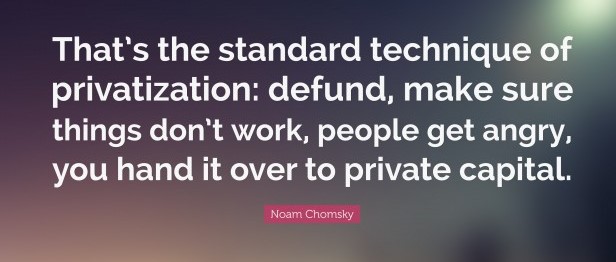
Here are a couple of recent examples:
Not remotely useful
There are many reasons why people might have trouble with internet-based or telephone-based communication. It might be down to age, a disability, or a neurodiversity issue, or it might be poverty and related deprivation – some people don’t have access to the technology. Complaints about automation and ‘remote’ services are not technophobia. No-one (well, hardly anyone) objects to online or phone-based options but what happens when face-to-face services are replaced by internet or phone-based ones? Some people lose access to those services, that’s what. Often the people who need them most.
When my GP took to hiding behind an often impenetrable online communications system, my immediate activist response was to set up a petition to gather names and make a protest. Here it is…
We need help using our NHS

Click here to read petition text
I knew we had councillors who were trying to improve GP access, so I thought the petition would add grist to their mill, but it went nowhere. I got talking to a few people I’d shared it with and found out why. People are afraid to criticize what’s left of our NHS, because they can see it’s fragile and under threat. They’re right, too. Any criticism of the NHS on social media tends to be closely followed by the appearance of an ad like this one…

… companies’ bots are reading your social media and using it as a marketing tool.
So what does one do?
Several times, I’ve written blogs criticizing the main food shop in easy reach from my home (in my case it’s Morrisons) for cutting back on staff, leaving customers the choice of queuing at the remaining tills or queuing for the supposedly queue-preventing ‘self-service’ check outs (which by they way, are not self-service. They regularly require staff attention, and that attention comes from the staff who are supposed to be serving at the kiosk, thus creating yet another queue there).
I quite regularly walk out of shops if their policy is to create queues, and I’m not in the mood. I don’t suppose anyone notices, and the staff, if they aren’t politically aware, tend to take it personally. The last time I looked in Morrisons, saw lengthy queues at their handful of tills AND at the ‘self service’ checkouts, I walked away and found myself in a black mood. The dearth of staff, grumpy queuing customers, the gaps in the stock on the shelves (which is of increasingly poor quality lately, particularly fruit and veg) made me think for the umpteenth time that they were actively trying to put customers off.
They are actively trying to put customers off
And then the penny dropped. Yes of course they are trying to put customers off. If your stock is of poor quality, your shop looks neglected, and you’re trying to get the wage bill down, you don’t want customers walking around seeing the problem. You want them to stay home, and order online. You want to sell them deliveries, or ‘click and collect’. It’s probably worth giving up on the customers who want to walk in, want to pay cash, and want to transact with human staff. Worth it to be able to run with a small team of ‘select and pack’ staff and a bunch of no doubt Uberized drivers. On top of that, if you want to sell unripe fruit and almost-rotten vegetables, customers are far more likely to accept that if it’s not them who gets to pick over the stock and spot the best ones. Send them a fait-accompli and nine times out of ten, they’ll put up with it.
Do what works – but what works?
So obviously, there’s no point in just complaining about the shop. Maybe what I need to do is demonstrate the problems of relying on online and telephone-based services. Maybe we should be throwing our activism at politicians who might do something about that, or inspiring people-friendly businesses, rather than trying to lean on malignant ones. So – do I carry on blogging? Take to social media?
The online squeeze
But you know, hits on my social media feeds and my blog seem to be down lately. Despite my one thousand plus Facebook friends, and my sizeable list of blog followers, things are slowing down. The same handful of people react to social media posts, and interactions from the blog are mostly limited to signed-up followers.
I slowed down for a bit, wondering what I was doing wrong, then started hearing the same story from other bloggers. It tended to come with comments like “we are scattered,” and “people have lost interest because they have no hope”. But why have people lost hope? There are millions of us who want a better society – we know that, because we met each other during the burgeoning Corbyn movement.
I realized my social media interactions had gone down round about the same time I started getting prods from the social media companies about paid ads. My blog hits had gone down round about the time the server company had started advertising a ‘premium’ service, where you pay for visibility. It’s vital to remember that nothing is really random on the internet. Social media companies and search engines decide who sees how much of what, and they manipulate it according to their business goals.
We need to work on out-reach
The more social media and other online outlets become commercial, the less unfunded activists will be seen by anyone other than each other. The less we are seen by the wider public, the more people will feel isolated and lose hope – unless we make a point of reaching out.
The first thing to do is to share blog posts, union and protest call-outs not just on your own feed, but into relevant groups where you might find new people. The second is to keep starting social media groups, and sending out invites to more people to join them. Corporate algorithms don’t decide what’s seen and shared in groups, the members do. I started this one a couple of weeks ago…

Click here to visit Hastings Cash Team
If you’re in the Hastings area, please join the cash team. If you’re not, please start a cash team for your town, so people don’t feel they’re a cranky minority if they want personal service and real cashiers. Then invite group members along to things, get talking and get some ideas circulating.
The real world
During the Corbyn years, I seemed to spend half my waking hours spreading social media stuff, and the other half on the Labour Party stall in town. As our movement grew, we had enough activists to staff stalls and run events in other parts of the town as well. We added film and discussion nights and socials – anything we could think of to reach out and meet more people. The more people we talked to, the more the movement grew. It was working. It was also noticeable that the Holdfasts in the party were always trying to discourage out-reach events. To me, that proves they were working!
In the early days of the women’s rights campaign, we were more or less shut out of political parties, unions and the media except for the most admirable Mumsnet, and women’s rights activists were getting banned from social media at a far greater rate than misogynists and scammers were, so we spent our time doing what (fortunately!) many women are good at – networking, chatting, meeting people. We grew such a movement that, after a few years, the UK became known as ‘TERF Island’. I am mighty proud of that. Don’t listen to people who write off your outreach as ‘a load of talk’. Anything that gets you out talking to people re-assures activists and others who are dissatisfied with our current condition. It tells people they are not alone, it gives them confidence, it grows the movement.
It’s good to talk!
Even you, if you are an online activist, will feel more enabled and more hopeful, if you find ways of going out and talking to others instead of sitting alone with your phone or lappy. That’s one of the reasons I keep bashing on about the importance of getting out and supporting picket lines.
Don’t give up. Talk to people. Have meetings. Find new ways to talk to new people. Let’s rebuild the hope that powered the Corbyn movement, but let’s do it out there informally, independently, where no organization (like the Labour Party) can say ‘no you can’t’, or (like the internet corporations) ‘only if you pay for the privilege.’
See you on a picket line somewhere soon (or in a café, or behind a stall, or on a march).
… and please share this blog post – in groups or by email, as well as on your newsfeed!
********************
Dear Reader,
Times are hard, and so the articles on this site are freely available but if you are able to support my work by making a donation, I am very grateful.
Cheers,
Kay
********************
 Kay Green