We were sitting around cabaret tables, at the end of the main conference day. In front of us, a promising array of glasses and cutlery and other shiny things. At the top of the room, on the other side of an expanse of empty carpet that would no doubt soon be full of activity, long buffet tables were being loaded. I was hungry. I was sitting, chin in hands, admiring the expanse of carpet, when one of the caterers called out that supper was ready.
I was suddenly overwhelmed by the wonderfulness of everything and, still quite taken with that expanse of empty carpet, leapt from my chair and ran plum across the middle of that wonderful space. A sound of thumping and laughter to my left, and I realised another woman had been inspired to join the sprint for supper. She was half my age, and could no doubt have covered the distance way ahead of me but she chose to add to the comedy of it by going at my speed, expending most of her energy in an impressive drama of knees and elbows.
No idea who she was, but by the time we reached the buffet tables, we were friends.
I don’t normally behave like that.
Latecomers to feminism
I know my blog articles cause ‘you don’t say!’ responses from some of our lifelong feminist warriors, and I don’t mind that one bit. I discovered feminism late, discovered it by meeting feminists when a random selection of us were put on the ‘Labour Against Transphobia’ hit list. (Well, it wasn’t random – we were Labour Party officers and Trade Unionists who were shouting loud enough that we annoyed the ‘trans rights’ brigade in the Party.)
Through new feminist friends, I discovered FiLiA, Europe’s biggest women’s conference and through FiLiA, I discovered the News From Nowhere bookshop and started reading a magnificent backlog of feminist writing. I think Gerda Lerner was is my favourite discovery so far.

As well as all that catching up, I’ve been trying to keep up with the equally magnificent variety of books the ‘new wave’, the feminist movement that earned the UK the name TERF Island is producing, such as…
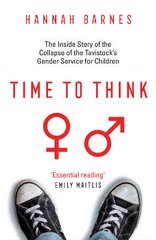


So far, every one I’ve picked up has tempted me to shout ‘this is the best feminist book ever!’
Of course, I don’t agree with every word of every theory in every one of them – they don’t agree with each other, because they come out of different places and experiences but, reading book after book that puts women first, that ponders and analyses the position of women in our society, and adds to the canon that centres women, that strikes down any voice, any force, that tries to deny or to blame those who centre women and girls, is a cumulative experience that sets right so many wrongs.

Last month, I read Sharron Davies’ Unfair Play. It was a jaw-dropping experience – buy it, read it – it’s gold dust. This month, I’ve been reading Karen Ingala Smith’s Defending Women’s Spaces and you know what?
This is the best feminist book ever!

I think this one might just turn out to be the most powerful handbook for feminists out of all the excellent books UK feminists have recently produced. In the opening pages, she presents the best demonstration I’ve seen of how class consciousness and feminist consciousness develop – how she grew up feeling more affinity with the kids she hung out with on her street than she did with women and girls as a class, how the atmosphere she lived in was influenced by the local memory of the moors murders, and the as yet unidentified presence of Peter Sutcliffe, and how she was unable to see the whole of the weight placed on our girls and women, or get any idea what could be done about it, until she’d put it all together in an understanding of the forces of race, sex and class that our society wields.
Trying to be a feminist without understanding that is like trying to be a trade unionist without understanding neoliberalism. You just won’t have your feet on firm ground.
Ingala Smith explains how all men benefit from the sexual violence of some despite, in most cases, their only crime being ignorance of how oppression works. She demonstrates clearly and unequivocally, with facts and figures and soundly sourced evidence, why women need all-female spaces and services, and how gaining and maintaining those spaces and services is a never-ending battle for women.
And that’s just the first chapter. By the end, she’s laid out, with names, dates and sources, what we need to be considering and campaigning on in terms of jobs, education, politics, sport and safeguarding. Where we stand on issues such as what people do with the stats and the language around healthcare, homicide and suicide; the nuts and bolts of policy capture, including, in facts and figures, precisely what Stonewall have done, and how the imposition of competitive tendering in local councils facilitated what they did; how some women end up working against what other women and girls need, and how to address thought-stoppers like ‘transwomen are women’ and ‘trans rights are human rights’. She even discusses that currently white-hot issue of ‘allying with the far right’, explaining why cross-party working can be useful but allegiances, formal or informal, with fundamentalists or with racists cannot.
The beautiful carpet incident I mentioned happened at FiLiA, which was held in Bradford that year (2019). It was the moment that I finally fully appreciated the wonderfulness of being released into women’s company at an event that’s laid on by women, for women and is, unapologetically and totally, all about women. It came back to me while I was reading Ingala Smith’s book, when she mentioned that John Berger quote, about how in our society, men are psychologically primed to do the looking, and women to do the being looked at.
The consequences of that take a while to sink in but when it happens, you finally understand personally, experientially, viscerally, what they mean by patriarchy, and internalized oppression. In short, you finally realize you’ve been holding yourself in, all your life, wary of ‘the male gaze’ – until you’re really in a space owned by women, and you do something daft like galloping across an empty carpet, just to acknowledge to yourself that you got there.
Out of the many reasons for defending women’s spaces that Ingala Smith explains and evidences in her book, the one my experience that evening speaks of, is the tragedy of our modern society, that so many women go through most of their lives without discovering the sheer joy of exclusively female company. If and when they do discover it, it’s normally a gathering in self-defence rather than something planned for the joy of it.
In most cases, the reason they don’t is that they’re immersed in the blinding fog of gender, and as a result just don’t value female company enough but, with the immense pressures ‘trans rights’ activists apply, it’s getting increasingly difficult to organize anything exclusively by and for women, even when it’s very obviously a matter of life and death, as women’s refuges are.
And women’s refuges are Karen Ingala Smith’s business. As chief executive of nia, she has led one of the few organizations that stuck consistently and fearlessly to their guns over their legal right to put women and children first in all decision making. Her book ends with a rousing manifesto, a portrait of a world where gender has been dismantled and the discrimination, coercion and gaslighting that go with it have been cast away.
Sharron Davies’ book is an extraordinary account of what women are capable of, and of the ubiquitous barriers of sexism and misogyny they have to battle through in order to shine. I didn’t jump on this one immediately because sport is not my main area of interest but, after hearing from Davies and other sportswomen at FiLiA in Cardiff last year, I realised their story is an epic one, and now I know that her book, too is a marvel and a whole nother essential chapter of a woman’s education.
Along the way, as you learn about the impossible task our female Olympians of the late 20th century had, knocking themselves to bits trying to match the testosterone-enhanced speeds of East German women, only to emerge in the 21st century to see the next generation asked to race against actual males. She reminds us how blindingly obvious the cheating was, and how media commentators nevertheless sat around discussing how our athletes just weren’t dedicated enough, didn’t try hard enough – and of how hard those in authority worked to make sure they did not see, or have to talk about, what was happening. Sound familiar?
Women who were girls on ‘T’
What really made my jaw hit the floor was her demonstration that we do already have a large body of evidence about what happens over the decades to women who were persuaded as young teenagers to take cross-sex hormones. The maniacs who did that to those East German girls did eventually get taken to court, and the litany of health and psychological problems those women faced over the decades that followed is on record. I wonder if the Cass Report thought to look there.
None of the issues feminists are addressing lately are really new, and none of the enemies are unique. Tinkering at the edges won’t help, nor will gossiping endlessly about one predator the media decides to sacrifice. We need a wholesale, multi-issue, system-level response… does that mean I’m turning into a radical feminist, now?
Please buy these books if you can afford it, and whether you buy them or not, please make sure your library has copies of them. All you need do is put in a request at the information desk, or in the ‘search the catalogue’ and ‘request’ or ‘reserve’ sections of your online library account.

[Apologies to those who follow this blog for the sudden disappearance of an article I know some of you had posted on social media (thanks for the shares!). I was getting so fed up of the focus on one man, and then someone pointed out the kinds of things you really don’t want around on the internet in the run-up to a police investigation and a court case so I decided to just lose that one, for now.]
********************
Dear Reader,
Times are hard, and so the articles on this site are freely available but if you are able to support my work by making a donation, I am very grateful.
Cheers,
Kay
********************
 Kay Green
2 responses to “No, this is the best feminist book … no, THIS is… No, wait…”
Thank you for the heads up on Defending Women’s Spaces, it’s outstanding! Karen Ingala Smith writes with surgical precision and is a joy to read.
LikeLiked by 1 person
She does indeed. I’m not hearing so much trumpeting of that one, compared to some of the other (also excellent) new feminist titles so keep shouting about it! 🙂
LikeLiked by 1 person