You forget the year, you forget the order of events, some names escape you but certain experiences stay with you, hard and bright and real, and inform everything you do for the rest of your life.
Like being a part of a gathering after dark in Parliament Square, a gathering called ‘Occupy Democracy’ – hearing from, and debating with, those politicians and commentators who were radical enough to join in (or wanted to look radical enough – you could usually tell the difference.) Dennis Skinner was there, Caroline Lucas, John MacDonnell – Craig Murray famously gave an impromptu talk on a street corner nearby when a bunch of people had been told, if they were listening to a speech they were in the clear, if they were just standing around they could be moved on for loitering. It was bright, exciting and very educational. Caroline Lucas said the standard of debate was better out here than it was in there, thumbing in the direction of the House of Commons behind her.

Like the night that wooden-head Minister – I’m not even going to do him the honour of checking his name – set the police to invade the Equadorian embassy the night Assange took shelter there, and those of us who hadn’t managed to get to London were watching and sharing tweets and amateur vids, and Assange noted that it was the activists who had saved the day by getting the news out live. There was still a limit, back then, to just how publicly our police were willing to break international law.
Like dancing between YouTube and Vimeo lists, trying to keep up with events during the Arab Spring, seeing Julian Assange tweet to the activists out there to urgently stop co-ordinating via Facebook. “They’ll be there waiting for you,” he warned. He was right. It was a tragedy.
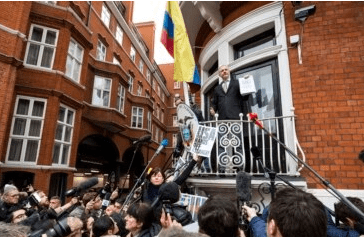
Perhaps it’s why I remember who Assange is, and why the US and UK establishment are so determined to punish him. Perhaps it’s why I know he’s not Wikileaks – Wikileaks is a team, and is still there, and mainstream journalists still use information they glean from the work of the Wikileaks team – they just never credit it because that would be bad for their careers. That’s the kind of people mainstream journalists are. Assange was one of those who are periodically chosen to take the rap, to show tame journalists and politicians what will become of them if they step too far out of the mainstream narrative.
Is it because of the wrestling?
I don’t really wonder why some people become rebels, radicals, outsiders — I wonder why so many people, who exhibit considerable intelligence and insight in some fields, manage to stay within the mainstream narrative, albeit as ‘sensible’ critics, ‘reading between the lines’, and apparently take themselves seriously.
Caroline Lucas came to Occupy Democracy, but at key points during the 2017 election campaign, she joined in the establishment’s anti-Semitism smears. John MacDonnell joins in the radical stuff when he’s sure of the ground, but is well known now, for his skill at nipping back to safety when we could really use some genuine radical voices.
I still have friends who won’t touch blogs or indie journalists, saying they’re unreliable. They say this to me, with no sense of having been rude at all. Most make exceptions – they’ll tell me Jonathan Cook, or Craig Murray or someone is ‘a bit out there’ but very interesting. I wonder if they think approving of indie journalism would commit them to approving of every Tom Dick and Harry who’s got a blog. I should ask them that – I should say ‘you read corporate newspapers, you watch mainstream telly – does that mean you’re giving credence to the Daily Mail and “journalists” like Boris Johnson?’
I used to read the Sunday Papers most weeks – the Times or the Guardian – and watch the News – BBC or Channel 4 – several times a week. Sure, I used to grumble at them for their glaring assumptions, but didn’t everyone?
It’s because of the wrestling

It’s understandable I suppose, in people before the internet, people who relied on newspapers and rumour – but even then, there were those who stood out as critical thinkers, and those who thought only long enough to develop an opinion that worked in a social setting. It’s a relief to see some of those people struggling with the mainstream narrative now it’s got so extreme, but also distressing to see that they are working hard on convincing themselves a change of party-in-government next year will solve everything and put them back in comfy-land.
What proportion of us, I wonder, are willing to step outside and do our own thinking? To go find indie news sources, judge them for ourselves, then trust them? Probably more than we think. Probably, part of the job of the mainstream narrative is to think up titles like ‘mainstream narrative’ that suggests the passive consumers of news are actually the majority, that they are ‘normal’.
Nowadays, I feel slightly foolish when I remember Assange’s warnings about Facebook I’m still there because it works as a quick messaging system for those of us who don’t have Smartphones, and because it still helps to build awareness of marches, strike-support and other political events but I do keep thinking about those 20th century feminists with their telephone trees, how – way before the internet was in everyone’s back pocket, they could rustle up a quick-response demo whenever and wherever one was needed. No political movement can grow if people don’t get a chance to meet out on the street, or in cafes or each other’s houses, and find out just who they’re dealing with.
Most of the time, it’s still possible to look critically at what you see on social media – where did that article come from, who wrote it? Is that video a single-take or a mash-up? Is that a genuinely shared link, or something Facebook has planted on you? But – I note Chomsky’s been warning people about AI. Soon, you won’t be able to trust the by-lines or the photos you see online (it wasn’t the camera that lied but…) and I note the meme going around the other day pointing out that the tech is there now, that soon, someone will be able to take a quick snap of you in the street, bung it in an app, and get your name and address. When they do, someone will pop up and say ‘that’s why we shouldn’t all have filled in those jolly online questionnaires that got your face and your age from Facebook, and a whole load of other info from your quiz answers.’
So yes, I’m still on Facebook, and conscious that if I delete everything, it’ll only mean that Facebook has a record of my online activity, but I don’t. Nevertheless, if you see me say something online, be assured that it isn’t something I consider a secret. Secrets need to be offline. Sure, I write about politics but I do my best politics in cafes and in the kitchen. If you’re not doing the same, please start work on it. We need to have alternative contact methods too – preferably several, and we need strong networks – preferably real-world based because – well – Afghanistan, Iraq, Syria… who knows which bit of our world the maniacs will decide to take apart next, when they’ve finished with Gaza, or who they’ll choose to take hostage in an attempt to keep the rest in check, as they did to Assange?
What was that about wrestling?
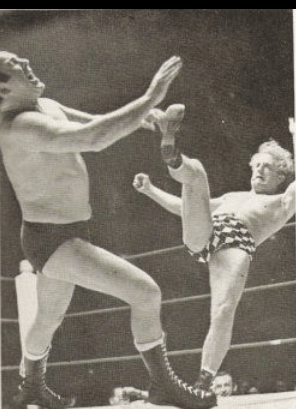
When I was halfway through writing this article. I remembered how, as a young kid, I used to watch the wrestling with my dad. We knew our favourites, we knew the goodies and the baddies. We cheered and booed and yelled, all caught up in the live drama of it. Years later, I got a horrible shock when I happened to see the wrestling one Saturday. I’d long ago learned it was all show, that the dramas, pratfalls and triumphs were carefully rehearsed, but when I saw it though more experienced eyes I was aghast that I’d ever taken it seriously. Well, you live and learn. But that is how I feel now, if I happen to see a bit of BBC news, or a “debate” in the House of Commons, or the headlines on the newspapers languishing in the shops.
If you’ve read this far, you’re probably with me to some extent. You probably don’t agree with me on everything but you understand that out here, doing our own thinking, we’re going to get it wrong sometimes — but there are a lot of us now. I begin to think that maybe most people are at least part way there. Let keep going, keep thinking, keep checking. We’ll get it right as often as we can and we’ll hope the last hope — that enough people will come out here and join us in some serious critical thinking before it’s too late.
********************
Dear Reader,
Times are hard, and so the articles on this site are freely available but if you are able to support my work by making a donation, I am very grateful.
Cheers,
Kay
********************
 Kay Green