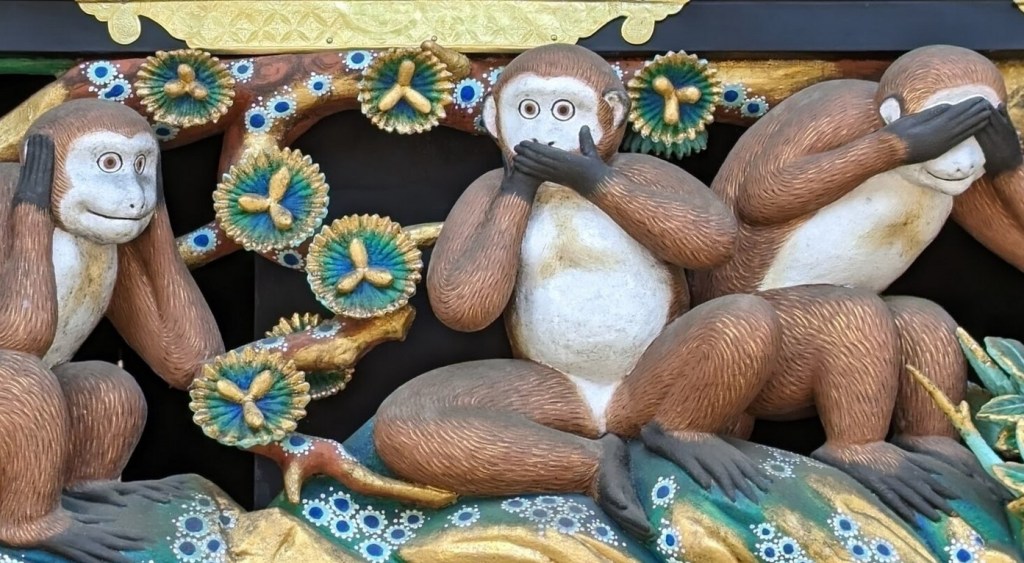
I didn’t know these people existed until last year…
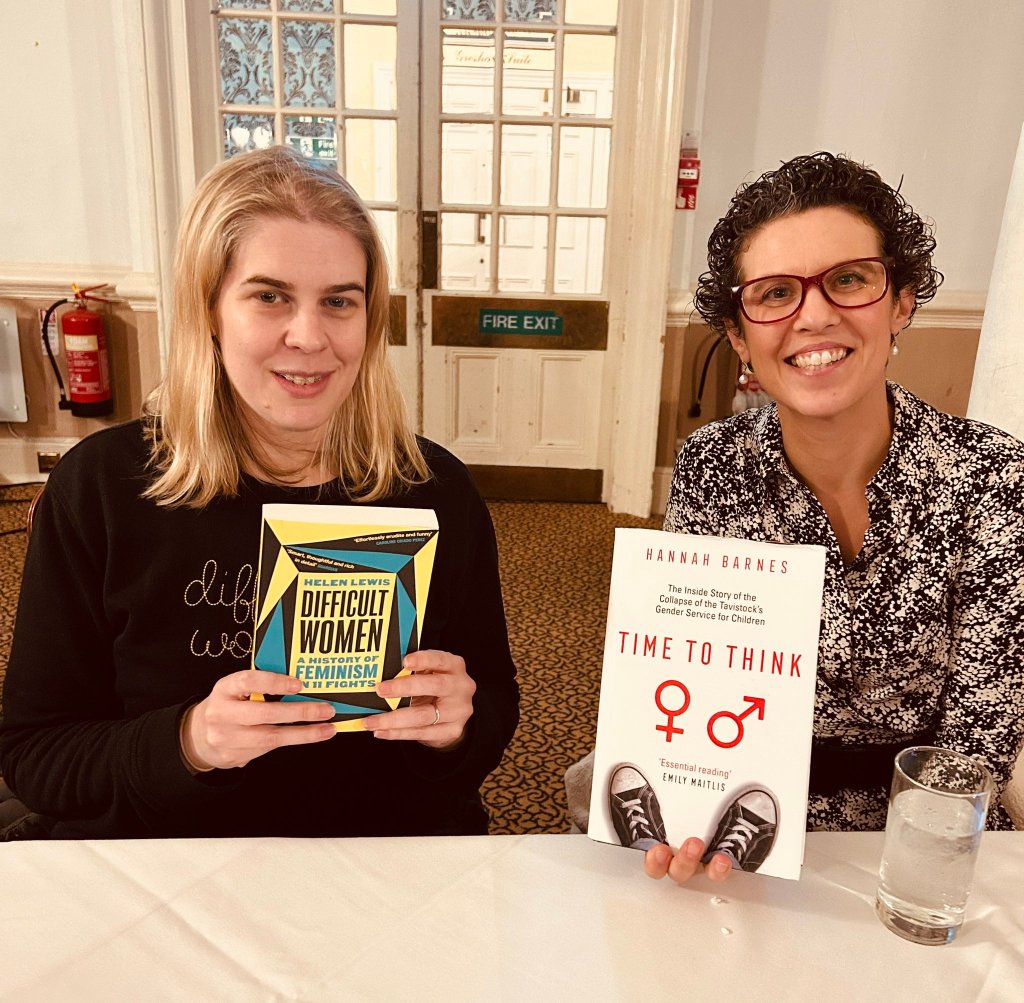
The first I heard of them was when their Brighton group fell prey to the ‘thou shalt not question gender ideology’ people in Brighton. They had planned to discuss one of the burning issues of our times, and had invited Hannah Barnes and Helen Lewis to plan a presentation for discussion – The Brighton trans mob said ‘no’, the venue caved, but the event was rescued by a Brighton feminist group who took over and made sure it happened…
So then I knew Skeptics in the Pub existed. My first question was ‘why do they spell “sceptics” in American’? I didn’t ask why they were questioning gender ideology because well – it has to be one of the most illogical, poorly evidenced ideas that’s caught on in modern day UK, doesn’t it? Especially the notion that anyone could, or should, set about ‘transitioning’ children. You don’t even need to be very sceptical (or even skeptical) to want to question it.

But then amongst the ‘if you don’t laugh, you’ll cry’ clips going around social media the other day was this one, from the Bristol Skeptics…
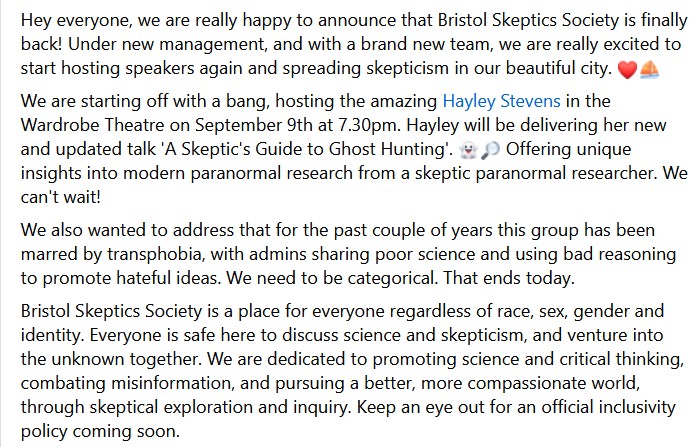
Sceptics enjoy learning by questioning things, right? Well here’s a run-through of the things a person might question in that post, starting from the end…
Official inclusivity policy
Once upon a time, ‘inclusivity policy’ meant things like making sure you don’t choose venues that disabled or impecunious people can’t access easily, and using a good sound system so the hard-of-hearing can tap into it, and making sure speakers are fully visible and using mics properly, etc etc…
… but judging by the drift of the paragraph in which the Bristol skeptics bring up their new policy – ‘everyone is safe here to discuss…’ etc, they are talking about something else. They are talking about ‘post-modernist’ safe spaces. This is a central tenet of identity politics – that you are what you say you are, but also that your ‘identity’ is so fragile that you need the people around you to ‘validate’ it with their ‘belief’. In particular, sex is a ‘feeling’, or ‘identity’, that has no validity unless it’s firmly believed in – that’s why in a recent assembly gathering in my town, the local ‘queer community’ asked for assurance that ‘no gender-critical views’ would be expressed.
These people appear to believe, simultaneously, that gender is an integral, tangible part of what they are, and that like JM Barrie’s fairies, they will die if their ‘identity’ is not believed. Surely, a good sceptical first-aid measure on that would be to challenge that belief and point out that nobody died as a result. Let me be even more specific. I have trans friends. I do not believe you can change your biological sex. It does not lead me to be rude to my friends, and they are not at all worried by my inability to believe you can change sex. In short, we have proved that people do not require protection from people with different ideas.
Identity politics
The alternative is to agree not to question anything anyone has related to their ‘identity’. At that assembly meeting in my town, someone turned up who was either using the royal plural, or was speaking for ‘the queer community’. She repeated the requirement to disallow ‘gender-critical’ views, was turned down, and argued ‘you don’t understand what we mean by “safe space”’. That was as far as that conversation went. For once, I was witnessing a meeting with a host who managed not to be led down the path of endless demands that identity politics creates. Thing is, we all know what ‘safe space’ means. It means ’we want you to agree not to say anything we disagree with, and we are willing to spend hours piling on the emotional blackmail to get you feeling like an accessory to murder if you don’t comply.’
Skepticism
You’d think sceptics would be just the people to take apart a piece of nonsense like that, wouldn’t you but – look at that second definition of sceptic in that definition screenshot above. I’ve been assuming the first – that sceptics are people who like to get together, listen to commentators on some current controversy, and question everything, in the spirit of investigation but maybe these pub skeptics (with a ‘k’) are the modern, USA-inspired sort, people who think you can’t really know anything, so any person’s experience is as valid as the most well-sourced, evidenced reports you could present, and who think everyone needs protection from evidence that ‘threatens’ their belief. Maybe that’s why the pub skeptics spell themselves with a ‘k’.
Skeptical ghost hunters
This isn’t actually impossible
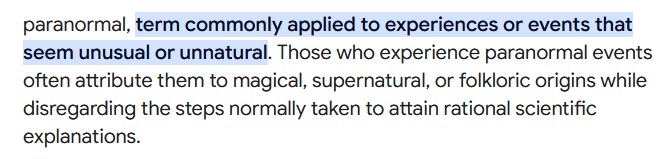
Investigating the paranormal would be a great activity for sceptics, if what they intend to do is question everything and seek out rational answers that may have been missed.
Science
‘Ghost hunting’ in that spirit would be what is known as ‘scientific enquiry’. There is no law against scientists investigating weird things – in fact, that’s precisely what they should be doing. The best definition of ‘magic’ I have ever heard is that it’s ‘those things we haven’t understood yet’. I don’t disbelieve people when they tell me about ‘weird’ experiences. I just wonder what happened. I knew a bloke who advertised himself as a troubleshooter for households with poltergeists. He didn’t do any of that stuff with upturned glasses or bibles, he’d go in and talk to all the members of the household about what was happening, seek out causes of anxiety or repression, and talk them through. He reckoned it worked. He didn’t know the ‘what’ or the ‘how’, but he’d figured out the ‘why’. He said poltergeist activity appears to be caused by emotional tension, and releasing that tension tends to ‘lay the ghosts’.
Fair enough. I’ve seen some things that appear to work that way – it’d be great to have some enthusiastic scientists working on the ‘what’ and the ‘how’, though.
Transphobia
Similarly, I would like to see some sceptics going through these ‘phobia’ terms that are being used. I understand the notion – that prejudice is based on irrational fears. The term was made popular during the gay liberation movement, where those standing in their way were termed ‘homophobic’. There were plenty of signs that the big problem there was what we now call ‘toxic masculinity’ – that is what happens when men (and sometimes women) feel so insecure about ‘manhood’ that they require EVERY MAN ALIVE to conform to ‘proper’ masculine norms.
That, as it happens, is precisely what ‘gender-critical’ people stand against. We defend people’s right to dress and behave and name themselves however they want to, regardless of gender which, in our view, is a set of arbitrary social rules used to divide and oppress people. We see ideas about gender as a trap, that keep both men and women working endlessly to try and conform to what they ‘should’ be. It sets us against gender-ideologists because we think the idea that you have to ‘change sex’ if you’re strongly gender-non-conforming is itself oppressive and self-defeating.
I think the requirements of gender are a trap that dissolves when you stop believing in gender. I believe the dissolution of gender is the true goal of feminism, but that dissolution is also the gender-ideologists’ greatest fear. That’s why they’re always so determined to shut us up.
Recently, we’ve heard the term ‘Islamophobia’ a lot, describing what happens when people fall prey to government- and media-led propaganda that seeks to blame everything on immigrants, particularly the highly visible, racialized ones, and the ones you see at the local Mosque. It is, currently, a useful word but as a habitual sceptic, I would suggest that we need to keep an eye on it because already we see signs that politicians and the media think that if they’ve got themselves on nodding terms with the local Mosque, they’ve ‘solved racism’. There are a heck of a lot of Black people, of all religions and none, who already begin to feel they’ve been forgotten.
But there’s a difference when people start acting on perceived ‘transphobia’. Gays really are homosexual, and need society to defend their right to live their way. Quite a few of our brown-skinned immigrants are Muslim, and do need to be defended against those who think Muslim = terrorist, and recent events suggest that all racialized people need to be defended against the notion that not-white = Muslim = terrorist.
In the same way, there are no doubt situations where trans people need to be defended against throw-back men who still believe a man who wears make up and dresses is a threat to his own identity but that’s not what happened with the Bristol Skeptics thing, is it. The people who get accused of ‘transphobia’ tend to fall into two categories – on the one hand, women defending women’s spaces and services. The law that protects those services is based on sex, so we stand to lose both our funding and our ability defend those services if we’re forced to believe people can ‘change sex’. On the other hand, there are all those medical and social care people who worry about kids getting led by gender-ideology into believing they need to ‘change sex’.
In short, accusations of homophobia and Islamophobia are usually valid challenges to prejudice, and are used to defend individuals who are threatened, whereas accusations of transphobia are usually used to defend an ideology and far from defending individuals, they persuade trans people that they are under attack, and should be fearful. We need a good big dose of healthy scepticism to sort that out.
The old team and the new
We all know what happened to the Bristol Skeptics, don’t we. There was a great big row, wasn’t there, because the old sceptics were sceptical about whether you can change sex, and/or whether anyone dies when gender ideology is questioned (that’s generally what is meant by ‘hateful ideas’), or even whether it’s actually helpful to ‘protect’ trans people from anyone who questions gender ideology. I’d be willing to bet a fiver that the kinds of things those old sceptics were ‘promoting’ were… well here are a couple of mine…


…but that’s because I’m sceptical, and because I remember the difference between knowing and believing.
Science and knowledge
Science is formalized scepticism. Science works on the principle that you should never be entirely sure. You should never be tempted to think you have all the answers, and can tell those who disagree to shut up. You treat your current set of beliefs (which you have tested and evidenced) as ‘working hypotheses’ – that is, ‘the best we know for now’. You welcome statements that you disagree with because they are an opportunity to discuss and test what we think we know, and as a result, we become more knowledgeable. You do not need to hound out your group organizers if they share stuff that challenges your beliefs. Take up the challenge! Hone your debating skills! In short, be good sceptics.
I’m glad there is an organization that encourages pub debates – we sure do need some critical thinking going on, given the endless stream of bullshit coming out of our government and the media, but perhaps challenging all that is what sceptics do, not what skeptics do.
********************
Dear Reader,
Times are hard, and so the articles on this site are freely available but if you are able to support my work by making a donation, I am very grateful.
Cheers,
Kay
********************
 Kay Green
2 responses to “Skeptics keep their eyes tight shut”
In North America, skeptics have been taken over by genderwoo. Although they make a big noise about being “critical thinkers”, their critical thinking doesn’t extend far beyond the “new atheism”. They attract mostly male adherents, by far, which partly explains why they are attracted to the men’s rights movement known as “trans rights”. They are never skeptical about class society, capitalism, patriarchy, or the oppression of women. Their loudest voice is through the magazine Skeptical Inquirer.
There is a skeptical minority, however, around the rival Skeptic magazine, published by Michael Shermer, which is gender critical, but flawed in many ways because of its lack of a feminist or a class-based perspective. Shermer shocked the skeptic community when he published an entire issue devoted to the topic:
https://www.skeptic.com/magazine/archives/27.1/
LikeLiked by 1 person
Thank you Jeff and yes, it’s the lack of class analysis, and also often a lack of effective anti-racism that really worries me amongst these trendily virtuous people.
LikeLike