The EU referendum was my first big dilemma after I’d got myself involved in Party politics. At very short notice, David Cameron was asking us for a vote on a complex topic most of us didn’t know much about, and most politicians responded with diatribes about how badly wrong other politicians were, with simplistic catch-phrases and highly unlikely statements painted on buses.
In the RMT, who I often campaigned with back then, “we” were on the side of Leave. In my local Labour Party, “we” were on the side of Remain, but I didn’t feel anywhere near knowledgeable enough to be sure. When The Party sent MEPs down to join street campaigns with us in the lead up to the referendum, it got quite lonely. One or two councillors or CLP officers would go out with them, by way of being good hosts but the membership, our loyal membership, who would turn out in hundreds for picket lines or for anti-austerity protests – well, they stayed away in droves.
Maybe, for all the fire and brimstone, most people weren’t confident of their opinions on the EU, or maybe they were scared off by the heat of the ‘debate’. The fact that the country split more or less 50/50 didn’t make me any more certain. Listening to most of the politicians’ ‘big’ speeches during the campaign didn’t clarify anything. The only MP I heard giving a calm, balanced talk on the issue, backed up with any actual evidence, was Jeremy Corbyn who, according to the fire-and-brimstone crew was ‘lukewarm’ on the topic.
I wonder how many of the ‘don’t know’s voted with their political or social ‘tribe’, because feelings were running so high it felt like football or something, and no-one knew much about what was at stake.
We needed a proper conversation
Some time after, I could see where all the doubt came from. Ireland had a vote on abortion rights, and their government did it properly. They announced it way ahead of the vote, and ran a variety of public information campaigns on the topic. By the time their vote came around, their people had had plenty of time and opportunity to find out what the arguments for and against were. (I have since heard it said that the big show was only because they were busy distracting people from an issue they didn’t want in the news but that’s governments for you – nevertheless, they did do the referendum properly.)
So does that mean we in the UK don’t do democracy properly? Did you know, the original name of that faux-left newspaper Labour supporters are supposed to read was ‘The Guardian of Democracy’? It was named after the principle that you can’t do democracy unless you have well-informed, well-educated voters.
The bravery of dissent
The more passionately committed a group becomes, the more courage you need in order to express ‘the other’ opinion. I saw the truth of this in our first party meeting after Brexit. Either all our officers and meeting-attendees had by then reached a consensus or they had decided the topic was ‘too hot’ to express doubts. One man – just one man – stood up and said that actually, he’d voted leave. He said he was worried about immigration. He said a number of others things, some of which I thought reasonable, some mistaken (as was the idea that leaving the EU would necessarily reduce immigration).
He was visibly sweating and shaking by the end of his brief, express-delivery speech. I was one of several people (all of whom had voted remain) who met up with him in the aisle afterwards to acknowledge his courage in deciding to do that rarest of things – to stand alone in front of a bunch of activists and say ‘actually, I don’t agree with you’.
That memory came back to me when a handful of women spoke against a motion at the LRC that we believed was calling for a policy that harmed women. The pressure was immense, and the room well-stocked with members well-versed in the rule book and the unwritten handbook of tactics. The motion was passed at vote by around 2/3 of the room. A number of arguments put forward in support were, I knew, completely untrue and a fair amount of the audience were, by the looks on their faces, very much in the dark about the realities of the case. Not surprising really, as well over half of them were male.
We needed a proper conversation
But the motion passed, not least because people in political groups know who their political allies are, and it can be very, very hard to persuade them a comrade might be wrong. It was not long after that experience that I wrote the article below, pleading with fellow party members to read up on issues on the agenda, rather than coming to meetings and voting on the strength of a couple of three-minute soapbox speeches. It’s a big ask of busy people but…

… and there are other things that can go wrong.
That multi-culturalism thing
Our local council try hard to be solid on anti-racism issues. They always consult the Mosque over issues relating to Palestine… Umm… are we sure that covers all the affected people? Does it cover women? Who are these ‘community leaders’ who have such big influence on issues relating to subcultures within our society? Who exactly are the Board of Deputies, for example?
Unconscious bias?
Criticisms of ‘unconscious bias training’ remind me of the more common criticisms of ‘critical race theory’. I think there’s an issue with priorities here – take, for example, ‘progressive’ organizations in the US where members will jump on you for an utterance that suggests you perceive a transwoman as male. They get agitated about what you appear to be thinking, but have remarkably little to say about the blatant racism that leads to large numbers of Black people being incarcerated and/or shot because the police perceive them as dangerous. However, I think a lot of people criticize both practices because it’s an easy way to dodge proper conversations about prejudice. Especially on the topic of women.
Feminism does not state that men are inherently bad or women inherently good. It does not define patriarchy simply as men dominating women. Rather, it presents an analysis of how both girls and boys are brought up in a way that gives more credence to ‘masculine’ ways of going on, and girls are led to believe they have a lot to gain by ‘standing up for’ men, and a lot to lose by thwarting them. As a result, when a group of people are led to make a badly misogynistic decision, it is often the women as much as the men who make it happen. What’s more, they often do it with a self-conscious flourish. ‘Look at me, being right on with the lads.’
For that reason, you can’t guarantee getting misogynistic ideas out of a debate by having a women-only discussion. You need time, and real, self-searching conversation along the lines of feminist consciousness raising to do that. And as for voting, whilst I agree that giving men a vote on a decision as to whether allowing males into female spaces impacts badly on women is bizarre, so is giving a mixed group such a vote without having an in-depth investigation and a lot of high-quality conversations first.
We need a proper conversation
We need to be aware that we’re trying to do real democracy in an oppressive society. When you take into account that our society is disabled by a formidable armoury of divisive ideas about race, sex and class, and add on the strange ideas some people have about age and disability, to name but some of the issues….
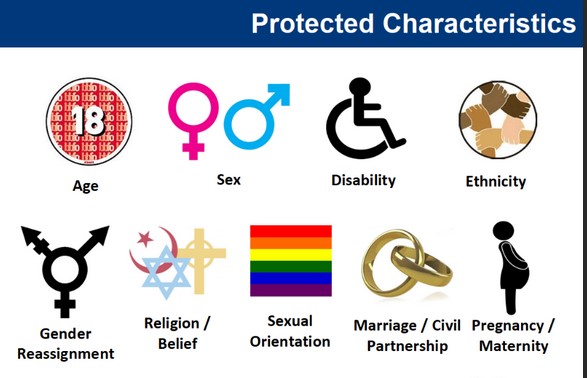
That adds up to a lot of issues where many people would have to be exceptionally brave to speak their truth to a roomful of activists keen to defend their traditional positions. I am not one whit surprised when I’m told AN ALL WOMEN group have voted that ‘transwomen are women’, without so much as asking for a definition of ‘trans’ let alone asking for impact assessments on women’s spaces, groups or services.
I have sat through a Labour Party meeting where I got accused of ‘provocative’ and ‘unnecessary’ arguments, and got positively screamed at (by a woman) for suggesting that a motion on trans issues needed an amendment to avoid trumping women’s rights. There was a strong atmosphere of censure. It was an attempt to place me beyond the pale. That’s a very efficient signal to all women that they’d be far safer keeping quiet.
Time to talk
To go back to that lone dissenter I met on the day after the EU referendum, we only chatted very briefly, just by way of doing a bit of emotional first-aid, really. We were far too busy with the Party stuff on the agenda but it’s a good example of my feeling that the actual learning situations come around, between, and all too often after ‘democratic’ debates and votes. So many times, I’ve sat in a pub after a meeting with a load of motions and votes in it and, a few pints in, I have said, or heard others say, “oh, if I’d known that, I might have voted differently.”
Experienced party-political wranglers know this, and make sure they have ‘skillful’ speakers lined up, and the opportunities for dissenting debate are kept to a minimum. Is that democracy? Should we be training up our feminist activists in that kind of wrangling, so their voices can be heard, and/or should we be seeking better ways of going on?
“We don’t talk to fascists/racists/transphobes…”
Last year, there was a government plan to make an old prison near my home into a refugee ‘holding’ centre. Local people objected. Local anti-racist campaigners went over to challenge them. It wasn’t a simple situation. The left were against the idea because – ‘holding centre’? What? – but also against people objecting to refugees. Once there, my feminist friends, speaking to the local objectors, found they weren’t racist at all but, on the basis of previous experience, didn’t want a camp full of displaced, lone males on their estate.
A conversation and some thinking time, rather than a placard-wielding demo, might well have found us all on the same side but a loud, public challenge was likely to push the not-particularly racist locals into the far-right, racist camp. Don’t get me wrong – I go to anti-racist gatherings in my town — in such troubled times, especially when we’ve seen several attacks on refugee accommodation, it’s essential. We can’t trust the police to lay on sufficient protection, but I really wish anti-racist demos could be a firm, quiet show of numbers, and an attempt to talk rather than placard-waving, defiance-shouting competitions.
What about urgent situations?
By the time we were a year or so into Starmer’s regime in Labour, most of my town’s former members had left the Party. We still met up organically though, whenever there was a picket line to support, anti-austerity or anti-war rallies to attend or a local event with political education potential, and we were all out on the streets together more often, and in greater numbers, after October 7th.
The situation wasn’t complicated for my local comrades the way it was for many, but it was urgent, because we’d had years of pol ed events by the various internationalist groups when we were in the Party. We knew Israel always aimed for revenge at a rate of at least 100:1 if any of their own got killed. We also knew that Palestine was suffering from a ruthless, illegal occupation, so the mass breakout from Gaza was inevitably going to be met with an orgy of killing by Israel. We were desperate to get some traction in the UK, and shed some light before our Zionist MPs could take the initiative to facilitate and arm ‘Israel’s right to defend itself’.
When we weren’t out marching for Palestine, we were comparing notes on our extensive efforts to get the political groups each of us were involved with to put out decisive statements in support of the UN and international law … but as well as working with PSC comrades, I had become increasingly a member of the ‘us’ that is sometimes called fourth wave feminism. A lot of my own work at that time was in the form of pleas for such statements from influential feminist groups.
Within days, the better-known feminist campaign groups were being castigated by lefties for either failing to make those statements or for statements that smacked of BBC ‘balance’ (in our eyes, Israeli propaganda). I was torn. I was every bit as desperate for results as my local comrades, knowing as we did that it would take a gargantuan push from all our NGOs to get our government to come out against genocide. I was trying, but I wasn’t screaming at feminist groups like some of my lefty friends were because, unlike them, I knew why the feminists weren’t straight out with the megaphones yelling ‘free Palestine’.
We needed a proper conversation
Most feminist groups don’t make decisions by way of a competitive debate followed by an open vote. Feminism is supposed to be for all women, not for one homogeneous political group — vitally, not just for a majority. Declaring something as group policy because 60% voted for it and 40% went home dismayed would be seen as a disaster. Many groups aim for consensus. On highly emotive topics, that does not come quickly. In the case of most policies that directly affect women (and that is a LOT of policies), that’s great – it means that when a feminist group declares a policy, you know there’s solid backing for it. The downside is that when urgent, public action is called for, especially on an emotive topic, your feminist group is so very not there, for a painfully long time. Many groups contained women who were in that state of helpless confusion over Israel / Palestine that the BBC so efficiently creates, and most groups had at least one or two extremely agitated Zionists. Add in the urgently pleading lefties like me, and try to imagine getting to consensus in less than six months.
It was a stressful, exhausting time but I still feel that, if you’re going to look for democracy, the feminist groups are closer to the spirit of the thing, even if they don’t have everything put to the vote the way unions and lefty groups (supposedly) do.
But we failed. Israel was and is permitted to wreak its terrible destruction in Palestine and elsewhere, in pursuit of a racist, apartheid agenda.
But but but
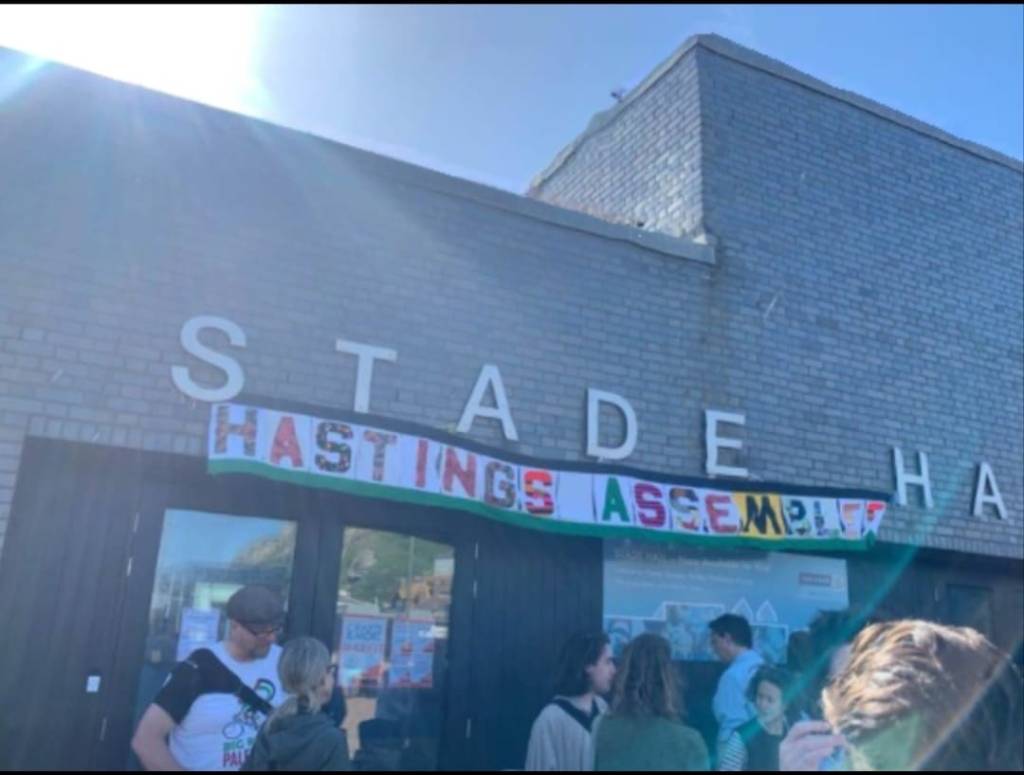
I think, if we want to speed up and polish up democracy, we need to do better than both the models above but I don’t think there’s a quick answer. I think the answer, when we’ve worked it out, will be about culture, education and activating local democracies, so that getting involved and taking responsibility can start at street level and work up. I think the seeds of what we need may be being sown in the assemblies movement.
Shopping list
We need more feminists to understand what racism and apartheid look like, so they’ll recognize it another time.
We need more socialists to understand that feminism isn’t women v men.
We need more of everyone to understand more about the countries whose populations our politicians are used to thinking of as expendable.
That’s a lot of pol ed, and a lot of patient discussion.
What do you think?
I kid you not, I wrote this article to help me try and figure out if I made any sense, or if I understood what I heard, at a meeting last weekend. It was all women: feminists, trades unionists and assemblies people. It was a very good meeting, with lots of listening and discussion, and no hasty votes. By the end of the day, the main idea buzzing around in my mind was our awareness that very little of the political goings on we’d been talking about (in political parties and TUs) really counted as democracy.
At one point, workshops and conference styles came into the conversation and I said wouldn’t it be great to run a second-wave style conference, with the help of some modern practices. Let’s put out some papers online for consideration, and invite women to have a read, and sign up for workshops on the ones that interest them. They would have time to digest the ideas, figure out where they agree or disagree and why, and could come along for a discussion. We could spend an hour or so picking apart the papers, forming resolutions on the bits everyone liked, and on any new ideas that came up that everyone agreed on.
How about a workshop based on this article? We could call it
How do you do democracy…?
********************
Dear Reader,
Times are hard, and so the articles on this site are freely available but if you are able to support my work by making a donation, I am very grateful.
You can make one-off or monthly payments by BACS to Mrs K Green, Sort: 07 01 16, Acct No: 43287058, Reference: blog
Or via Paypal…
Click here to donate via Paypal
Another great way to support this, and other independent blogs you read, is liking and sharing on social media, signing up for email updates, or by emailing a link to friends.
Cheers,
Kay
********************
 Kay Green