
This area I’ve been trying to think about – the whole sweep of countries that Israel seems to have a license to bomb – it’s been going under the name of ‘The Middle East’, normally pronounced in news reports with the prefix ‘Troubleinthe’: here in the UK, the BBC brought me up to be very hazy about the details, but confidently of the opinion that it’s full of troublesome people who cause trouble.
But what’s it really called? One of the events I went to, to try and figure it all out, was a discussion with Palestinian historian Illan Papé. Amongst the dozens of fascinating scraps I picked up there was that it’s generally Europeans and US people — those of us who call ourselves ‘The West’, who talk about ‘The Middle East’. Both very vague names, when you live on a giant ball – but according to Papé everyone from that region of the world call it ‘Western Asia’.
Western Asia
So then, Western Asia was my goal in my last few library trawls. (it’s an odyssey of mine lately, since so many of us are all out of spare money, to flag up books you still can get in the library. They have precious few new books, other than paperback romances and miles of detective thrillers, but they do have some older books, and a lot of them are well worth your attention, when you can’t afford to buy all the new ones).
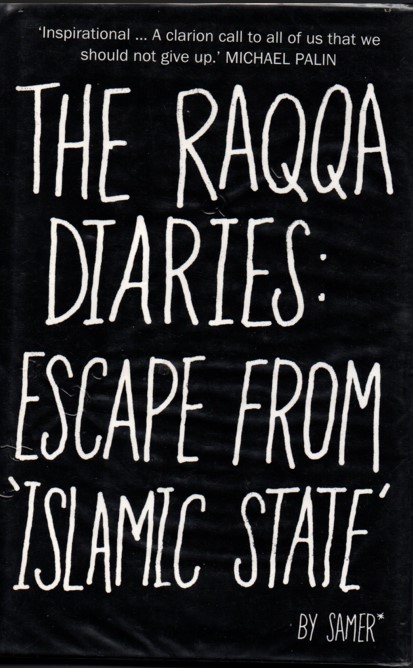
I had come home from the library several times with an armful of books about Palestine, Jordan, Lebanon, Syria, Iran and Iraq… when events suddenly went from awful to downright surreal. I had barely finished The Raqqa Diaries by Samer, when I looked up to hear the news that not only had Assad just fled Syria, but ‘The West’ were cheerfully hailing the Jihadi leader who was taking credit for the liberation of Syria – and before we could digest that, Israel piled in and, with their usual panache, dropped hundreds of bombs on just about anything that was left that still looked to be of any use to Syria.
On being repeatedly liberated
(sorry for all the brackets, it’s hard to keep up)
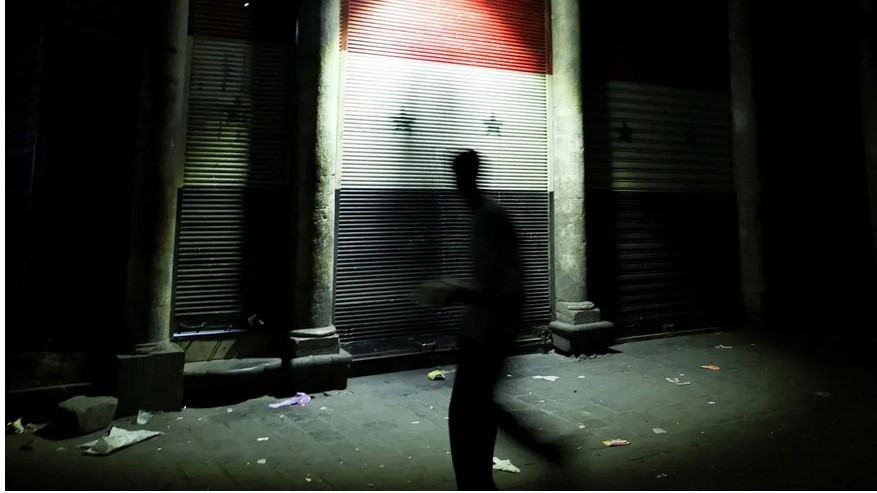
What’s just happened in Syria, and the way the media and our politicians (who were until yesterday, cheerfully approving of the police arresting people who said anything that could be construed as supporting ‘Islamic’ ‘terror’ organizations) were heaping praise on the HTS bloke and his terrorists (that’s official – really – according to Jonathan Cook, the US still has a whopping price on his head), calling them the saviours of Syria, and announcing happily that all the refugees can go home.
Home to a country now run by, as Cook describes them, the ‘head-chopping, women-abusing, minority-oppressing terrorists’ about whom we were barely allowed to speak without getting arrested until this week, home to a rain of Israeli bombs, and a country almost devoid of functional infrastructure.
I don’t think Samer would be surprised. He’s currently living in a refugee camp – yes, it’s not only in Palestine where people can end up living behind fences in refugee camps in their own countries. He got there by means of a dare-devil dash under gunfire, which he embarked on when he was threatened with arrest by jihadis in his own city, after suffering the privations of the Assad regime, then the stress of being liberated by the Free Syria Army aided, to his great alarm, by several bands of those very questionable jihadis, then being liberated from them by what we know as Daeesh, who were the maddest and most violent yet of the liberators until the Russians came along to help, which they did in the way distant, powerful countries always seem to, by dropping bombs on towns infiltrated by whoever the enemy was perceived to be.
Yes, they were helping but to Samer, it felt a whole lot like his house being bombed, his father being killed, and his mother being scared half to death. And then he ran for it, and then he was in a refugee camp and what’s more, this book of his diaries was elicited and published by the BBC so, when you look at their news reports about Syria now, you can be in no doubt that the Beeb are well aware of just who Syria’s latest ‘liberators’ are. If you don’t have it quite clear yet, here’s that Jonathan Cook article I was quoting from.
A hobby job in Iraq
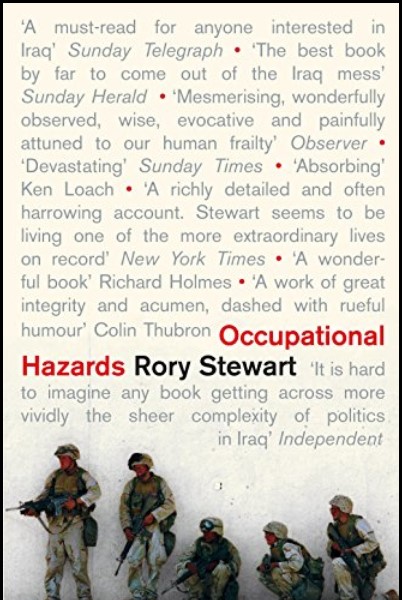
I really wasn’t sure how I’d go about describing Rory Stewart’s book of his time playing colonial governors in Iraq until I came across an article by Suzanne Moore, calling it his hobby job – well done Suzanne. On the nose.
Stewart is very good at doing ‘likeable guy’. Just like the likeable guys of the Raj in books by authors like Paul Scott. They manage to go on doing their jobs and drawing their salaries, and present as likeable at the same time because they are world champions at that old civil service sorcery… what shall I call it? ‘Irony’ doesn’t cover it – it sounds like self-depreciating humour, served up with a long-suffering awareness that the jolly old system never quite works but one does one’s best… the result is that the reader (or listener) is never quite sure what the writer’s actual position or opinion is on absolutely anything at all – just that he’s keeping his chin up and jolly well doing his best.
Well, whatever it is Stewart thinks, he’s drawing a jolly good salary for doing whatever it is he’s doing in Iraq, which includes running and swimming and rescuing dogs and having fun at discos in the jolly old Green Zone in Baghdad in between jolly well surviving getting shot at and lied to quite a lot. You could almost forget, as you wade through days and days of him being patient with proud, recalcitrant, dishonest leaders of this tribe and that faction, trying so very, very hard to lead them into the kind of democracy The West has decided they’re going to be, you could almost forget he’s the representative of a coalition that quite recently murdered a large portion of their army in one night (remember the crispy creatures?), bombed the hell out of all their cities, systematically destroyed their power and water infrastructure, then moved in to parcel up and sell ‘reconstruction’ opportunities to Western-led corporations.
I think my favourite passage in the whole book is this one, describing one of those weird, deceitful Iraqi leaders he was trying to reason with:
‘He took it for granted that the occupation was illegal. And he could not see how little connection there was between his proposal to allow Islamic vigilantes to run security and the coalition’s version of the rule of law and democratic policing. But he was an intelligent and articulate man. I wondered if he was simply seeing something that I was missing.’
Many, many pages of him trying to understand the distinctions between different community leaders he has to choose from (because the US have told him, no elections. You decide what the democratic choice would be and put them in charge). Meanwhile, he’s fielding complaints…
‘How do you explain the boot marks on the door, then?’ asked Sheikh Rahim. ‘I can show you the marks and I can show you photographs – they are British military boots.’
Stewart writes, ‘I had no idea but I guessed. “If this happened, and I have no reason to believe it did, the soldiers were searching locked rooms or looking for observation points. They did not steal the equipment.”’
Similarly, when he challenges an Iraqi leader over prisoners being tortured in Iraqi custody, and he is met with some facts, he ‘didn’t believe it – hoped it was not true.’
It stinks, but he’s written it down and published it. What is the reader supposed to think?
We eventually get, ‘When I saw on television that Iraqi prisoners had been tortured in Abu Ghraib, I almost resigned.’ He then chunters on about how all armies behave if not ‘aggressively monitored.’
He tells us that his final days in Iraq were chaos (funny, I thought all the days I’d read about were) and he gives us a walloping, Wild West account of his heroic last stand, as the various Iraqi forces finally get themselves together enough, and the US/Coalition forces finally stand back enough, to remove the Coalition ‘governors’. It’s quite an exciting chapter. At least they managed to bring home the dog he’d saved, which went on to become a British regimental mascot.
By comparison, the paragraph he gives to his neighbouring counterpart, Mark Etherington, is a mere summary, with scant heroics in evidence but it will interest people where I live…
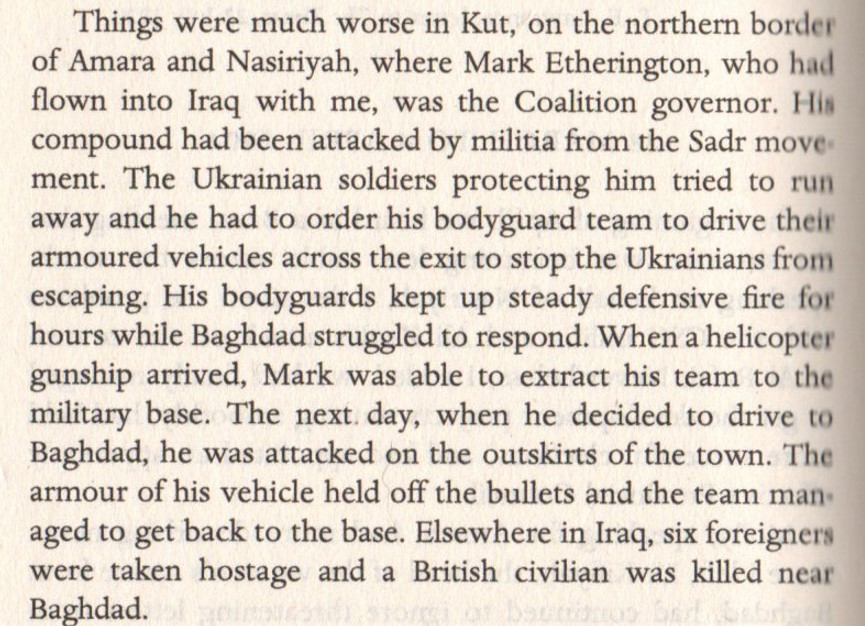
He doesn’t say what happened to the Ukrainians. — This might be the point to note that in Stewart’s tale, all Coalition troops except the US and UK ones show hesitation if not outright refusal, when faced with the task of shooting Iraqis in order to defend Iraqi buildings and territory from Iraqis.
Back in the spring when my town had council elections, I received a message buzzing with baffled rage from our former local county councillor (a Labour ‘centrist’) when I backed Etherington, a jolly nice, locally involved, Green Party candidate for our borough council. I don’t think he (Labour’s man) will ever understand how I could completely honestly say yes, I think this former army officer turned quasi-colonial governor turned Green Party council candidate is a better bet for our council than the current iteration of the Labour Party – but if you lived through what I did in the Labour Party, you might understand.
Etherington is retired, he’s not interested in party politics. He was talking about ‘community involvement’, about sorting out the bins, looking after the park, and trying to get some sense out of the planning department and Southern Water. When asked about Israel / Palestine, he had no hesitation in agreeing that the Palestinians had been suffering astonishing abuse for years.
It would be nice though, if the people of the town could look at this situation before the next General Election, and get over the idea that the Green Party are a bunch of lefty, progressive, anti-war types.
Lessons learned
I’m taking that stack of books back to the library today. Some are very old, some are infuriatingly bad, but all are enlightening, and all show the US, the UK and Russia in equally bad light when it comes to the routine, long-established destruction of ‘The Middle East’, whether they’re written by West Asian authors or UK or US ones – the latter illustrating the bizarre mindset that allows those military and/or civil service types to do what Rory Stewart did, and come out jolly likeable.
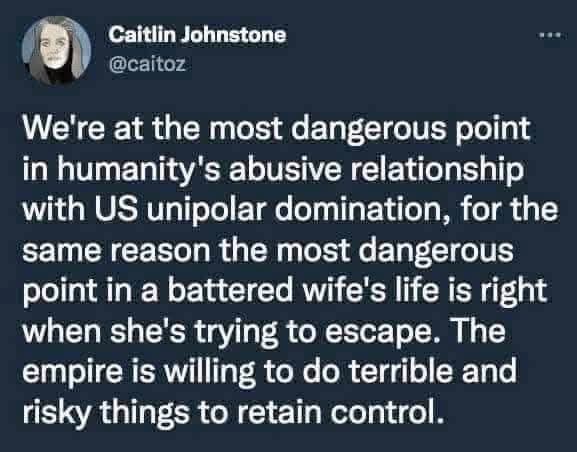
Today, I’d like to give the last word to Caitlin Johnstone.
********************
Dear Reader,
Times are hard, and so the articles on this site are freely available but if you are able to support my work by making a donation, I am very grateful.
Another great way to support this, and other independent blogs you read, is liking and sharing on social media, signing up for email updates, or by emailing a link to friends.
Cheers,
Kay
********************

