I said I’d post again when the videos were released. Links below.
Thanks to Ian McNee for a smashing set of photos here’s a selection…
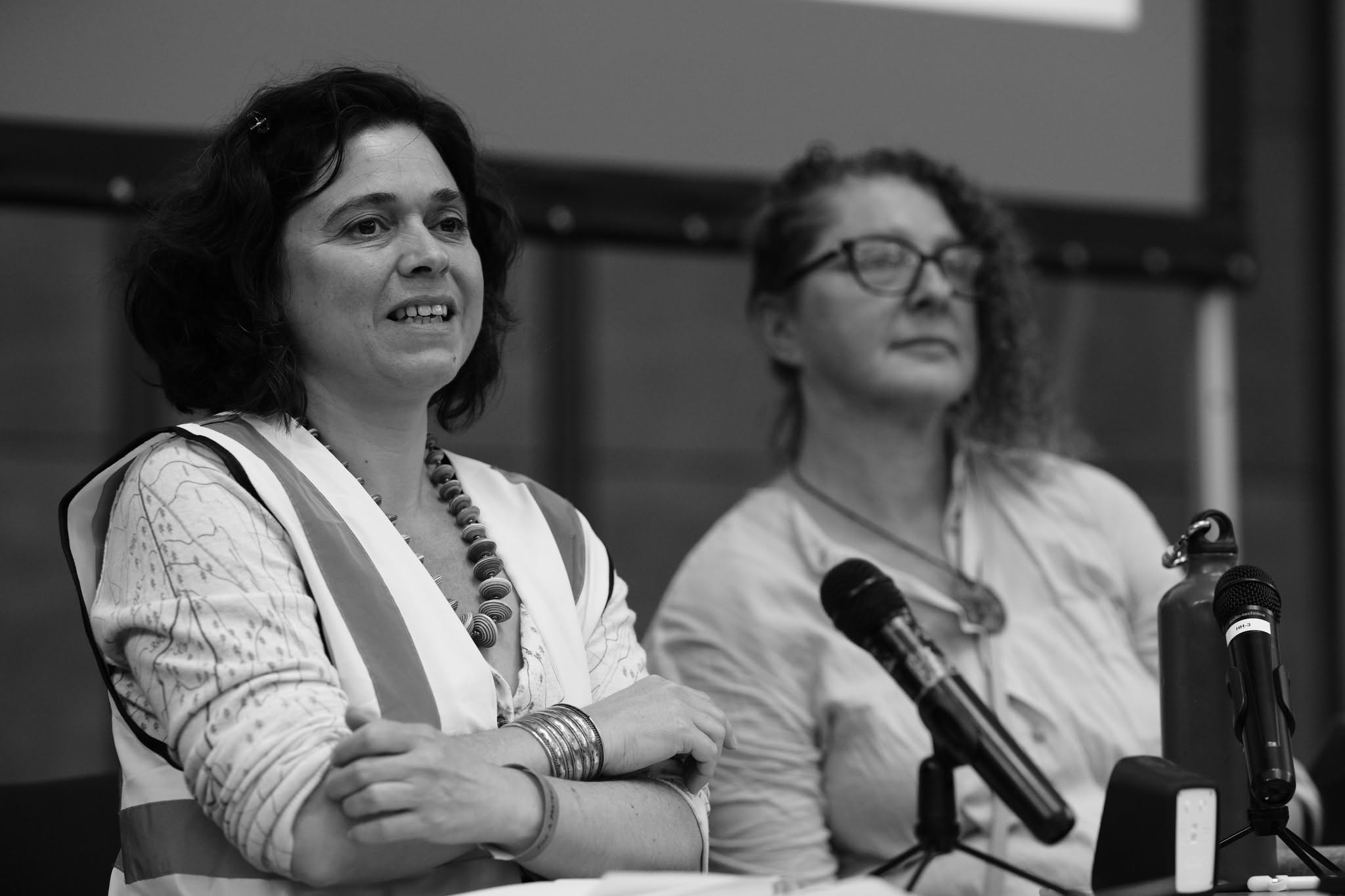
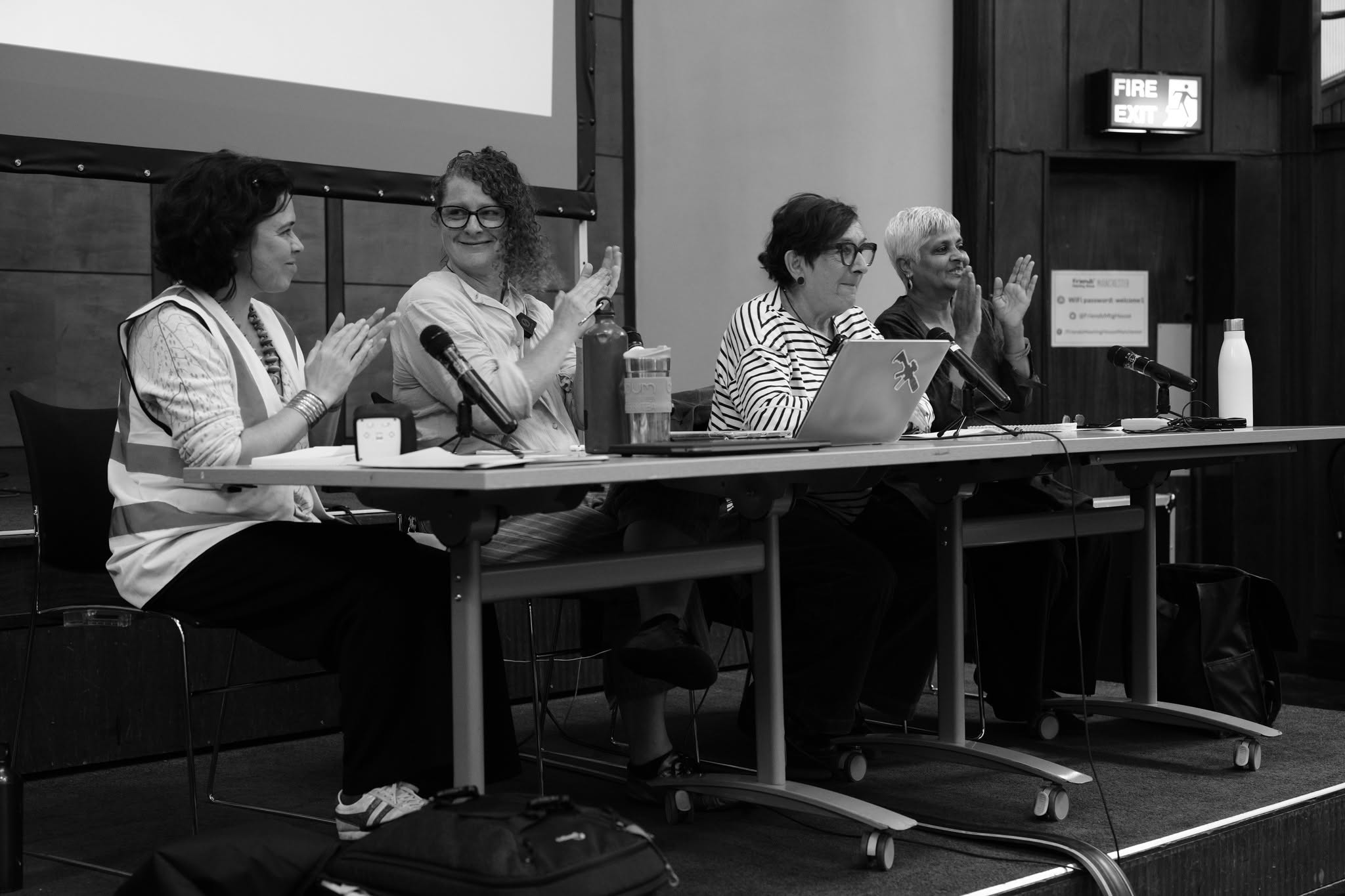
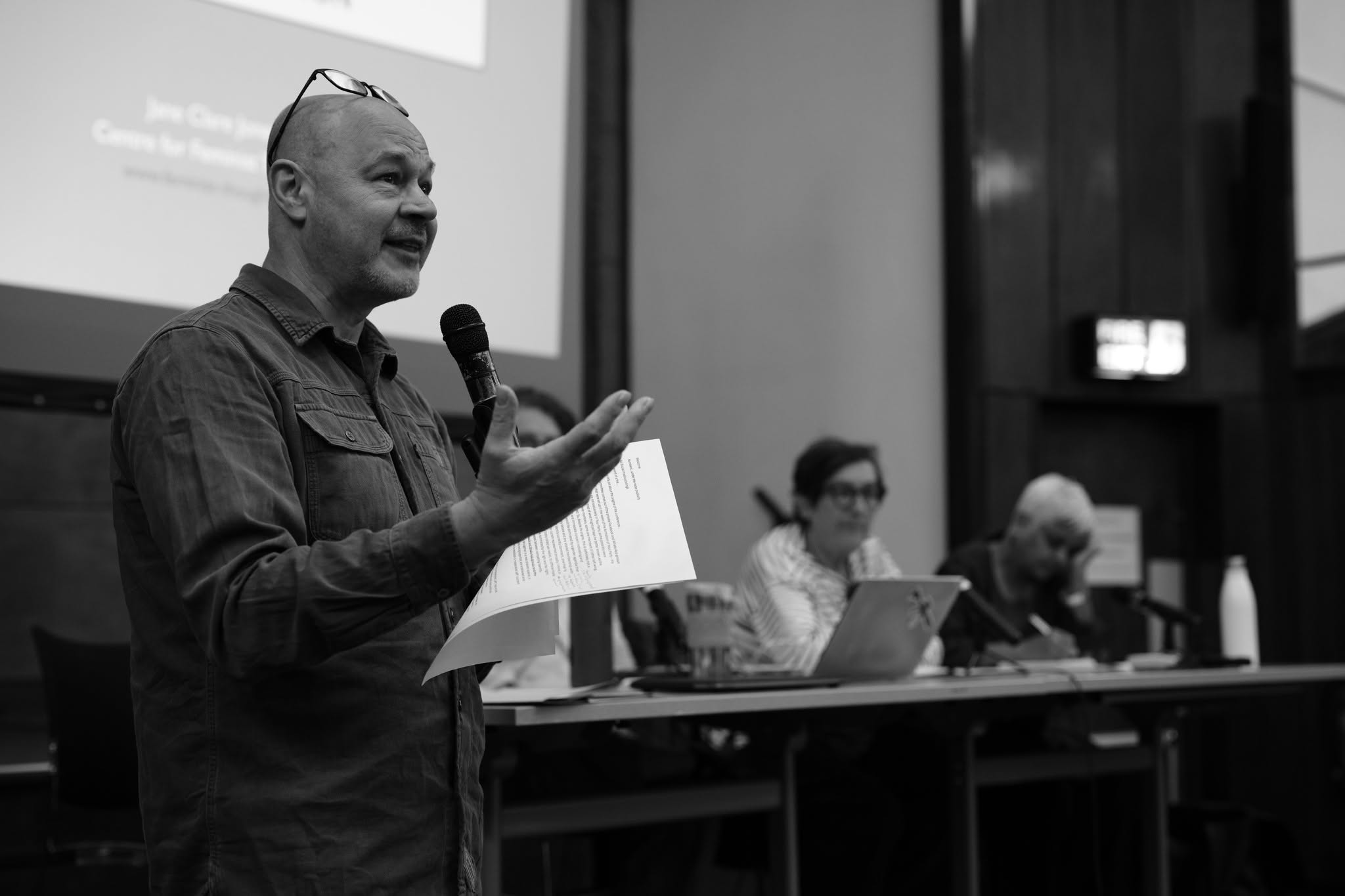
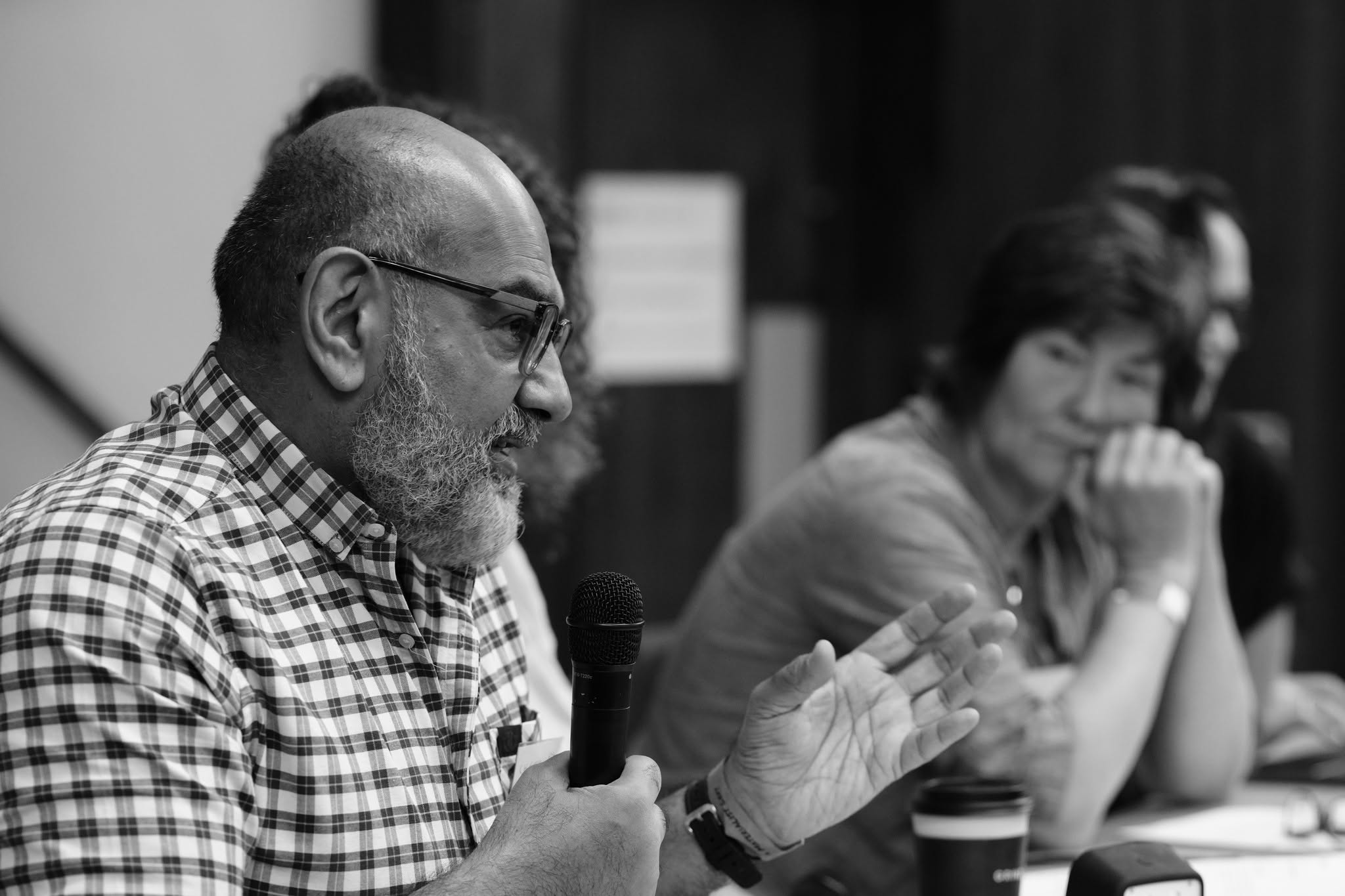
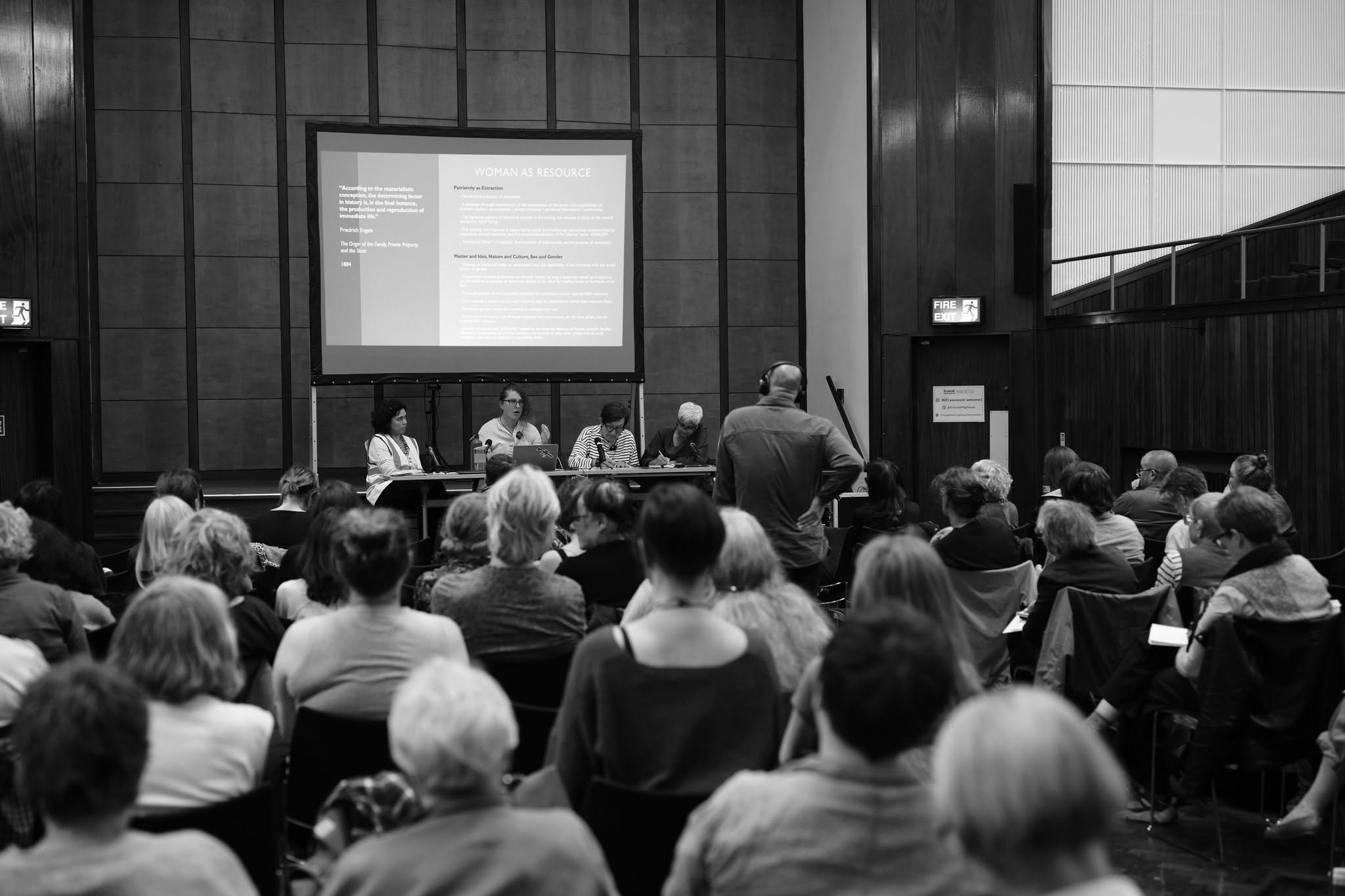
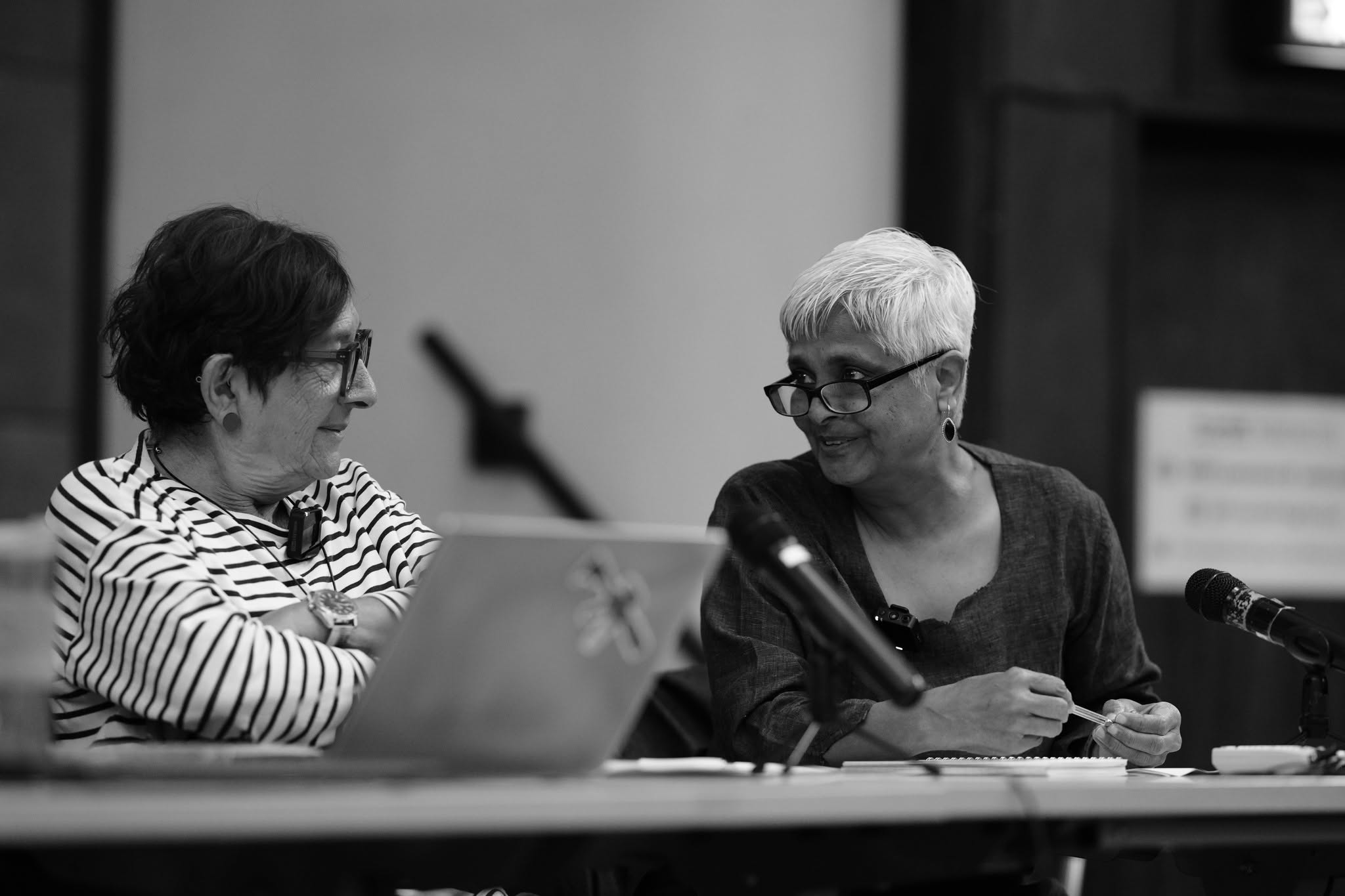
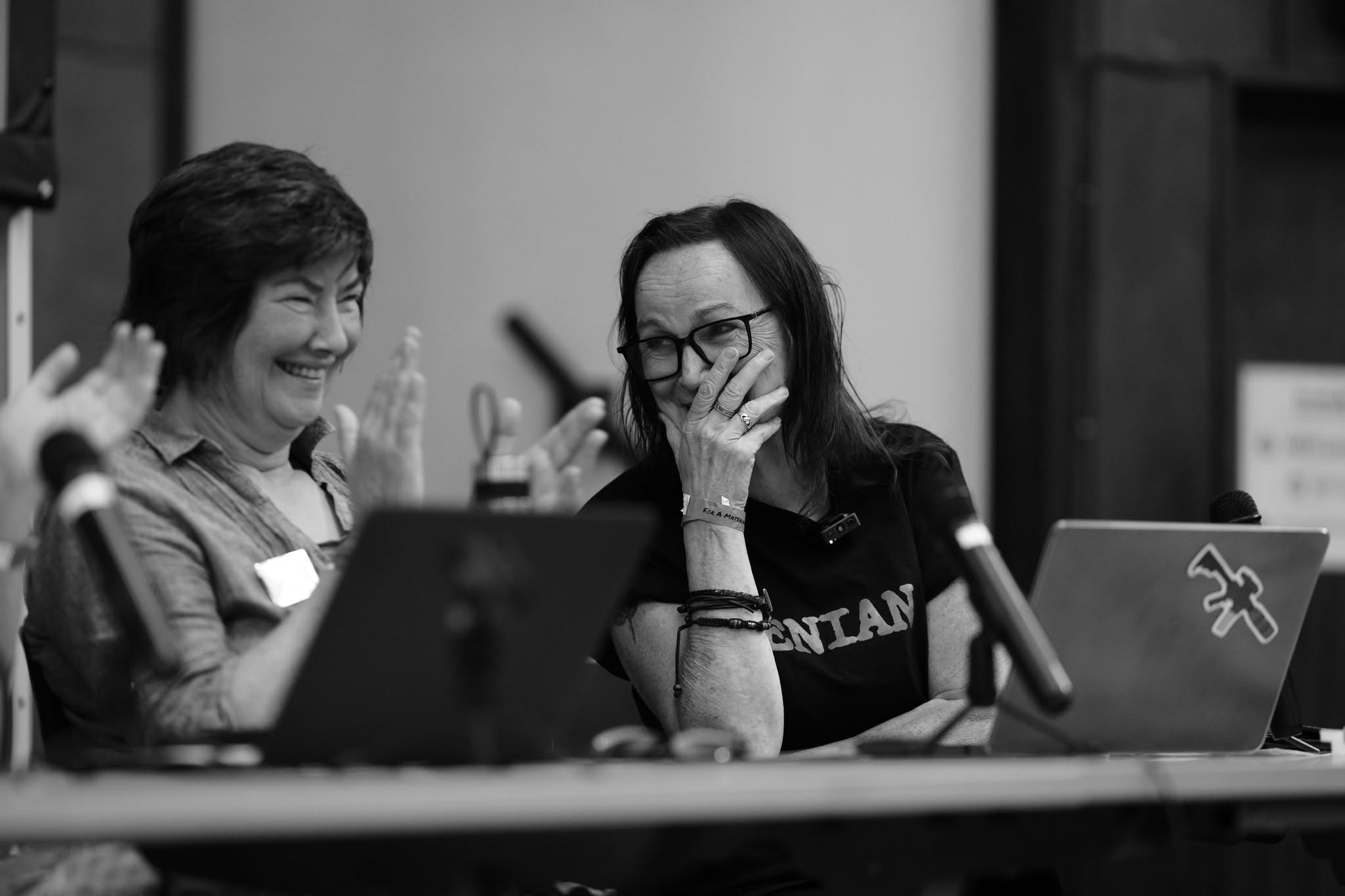
All the speeches will be available soon on the Materialist Left YouTube channel, for which, thanks goes to Inside Film.
Here are the first two panel sets…
Panel 1: Mary Davis, Jane Clare Jones and Pragna Patel, chair Helena Coates.
Panel 2: Chetan Bhatt, Kay Green, Deirdre O’Neill, chair Jane Clare Jones
Panel 3 was mostly about Trade Union activity around defending the Equality Act. For now, here is our position on sex realism as presented at the Your Party conference:
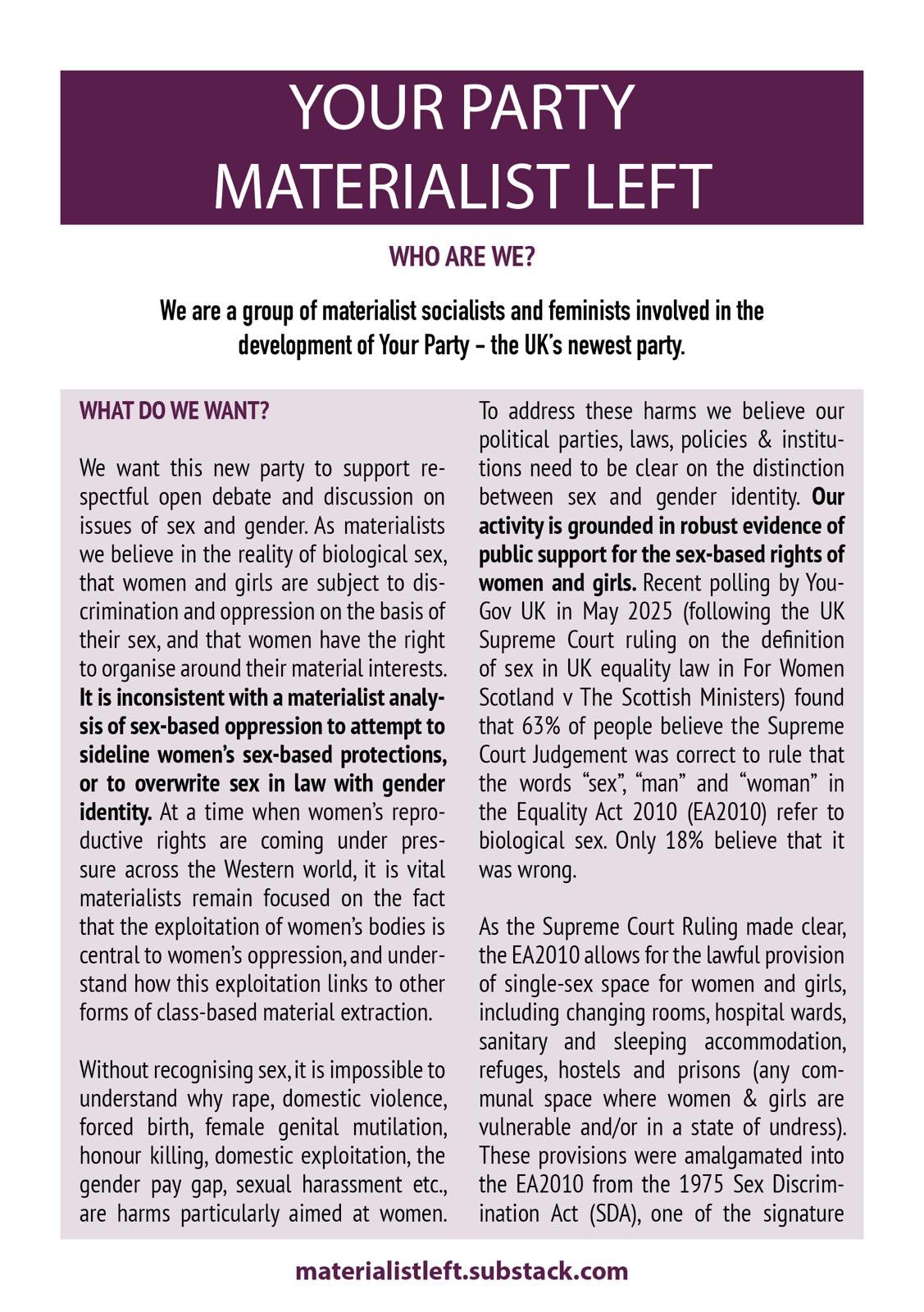
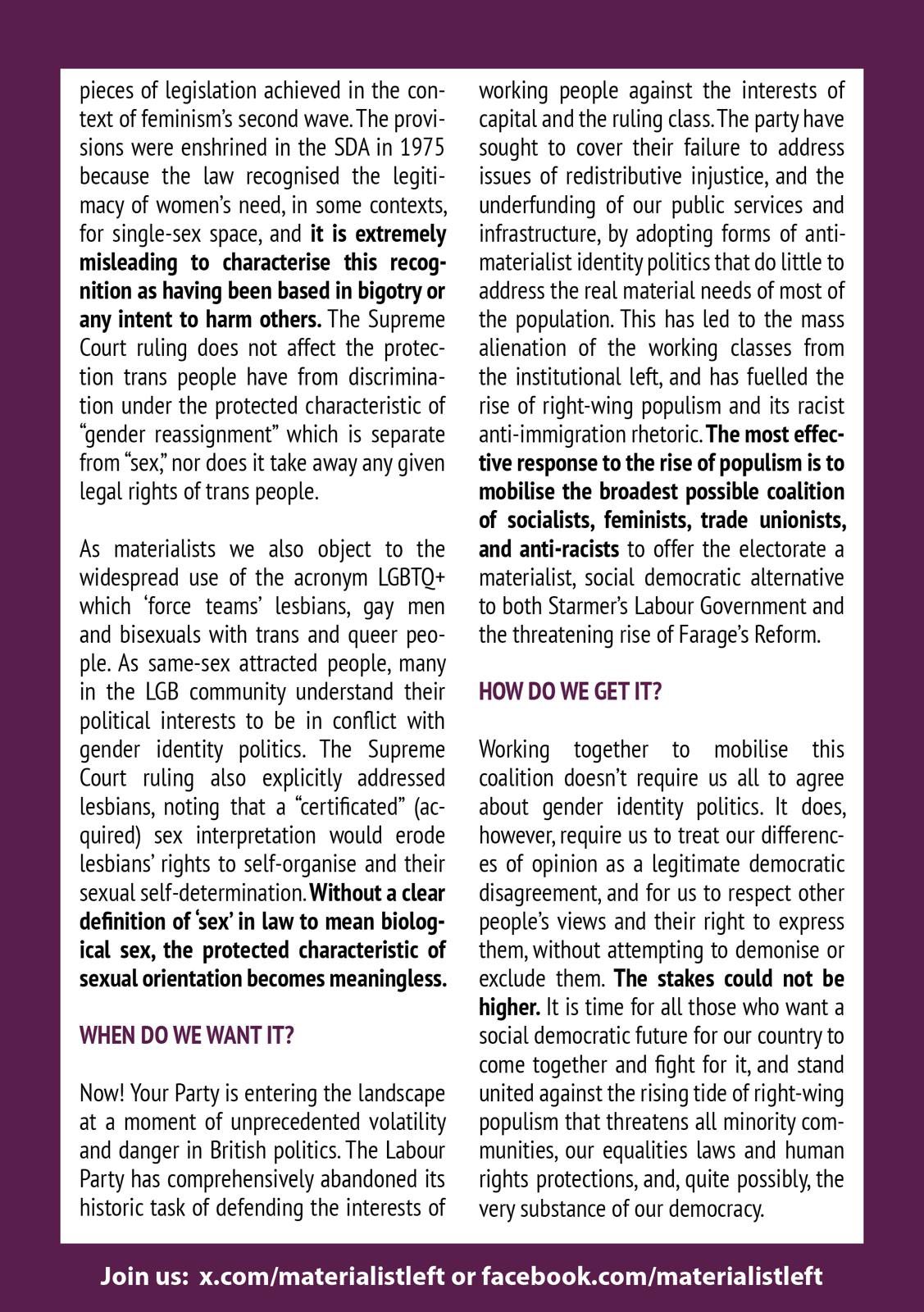
For more information about the Materialist Left, check out our Facebook and Twitter pages, and the Materialist Left Substack
Click here for my write-up of the day … and for those who prefer reading to listening, here’s the script of my speech from Panel Two:
One of the questions when this meeting was planned was ‘how do we, the materialist left, distinguish ourselves from those on the right who also oppose identity politics?’
How do you know yourself, when you’re doing socialism and when you’ve wandered off into this or that id-pol informed idea set?
I would like to answer those questions with a series of stories about how I learned the difference between socialism and identity politics
I joined LP in 2015 when it seemed to be taking a left turn.10 mins later, I was vice chair of a CLP (Constituency Labour Party).
I want to make clear that the people in my CLP were good people, because my talk is about things that went wrong. My CLP was doing its best to do good politics for the sake of everyone.
Faced with the sudden, huge influx of members come to join the Corbyn movement, they set about teaching we party-political rookies to be socialist, anti-racist right-on lefties who could win elections. That included two HUGE distractors from socialism – post modern identity politics and trying to look good and get elected.
The most complicated bit was learning all the ways of being antisemitic, so we could avoid them. The trouble is, the very ideologically based IHRA definition of antisemitism was in play, and it was the hot-spot of the struggle between the left and the right of the party – people who, obviously, were acting out of different ideologies.
I ended up thinking the antisemitism rules were “Don’t say ‘Zionist’ and don’t say ‘Blairite’” – nothing about ‘don’t be nasty to Jewish people,’ because why would we be? Some of our best officers were Jewish socialists.
I learned, in the same post-modernist frame, how to avoid being classist, ableist, sexist, ageist or racist, which was much more complicated than you’d think, and almost entirely about learning which words and phrases to use or avoid.
It worried me, in case I had to communicate all that to the people of Hastings on the doorstep. It worried me, because I could feel the gap between the words and reality.
It all came to a head for me over the topic of sexism in a Labour Group meeting in the council. Someone claimed we absolutely don’t do sexism and I shocked our councillors by laughing, and talking about female candidates’ experiences, such as waiting in the corridor for candidate interviews, having to listen to old male members going on about how all-women shortlists damage men’s careers.
I was pressed to tell them who had said it. I refused, because I wanted to address the issue, not personalise a battle. But they didn’t believe there could be more than one, so they chose an old misogynist member (who was guilty of many sins) and removed him. There, we were perfect again. In true post-modernist, individualist terms it was problem solved. We could not possibly go around believing there was sexism in a socialist CLP.
Similar to the sublime confidence in our ‘sexism free’ CLP was a remarkable speech I heard at the Labour Women’s Conference in Telford. Dawn Butler proudly declared that there was NO systemic racism in the Labour Party. Everything was wonderful. I looked down at the conference programme. There was a workshop coming up for Black women, about the barriers Black people faced trying to get into elected political roles. I decided to go and listen.
The workshop was run by a Black woman who, if I remember rightly, was the only Black woman in a 60-seat, city council. It sounded to me as though there were some problems there somewhere. One Black woman after another stood up and say they’d attempted to stand for this or that role, and something – who knows – something – something invisible, always got in the way. It can’t have been racism obviously, because we knew we were all trying so hard not to be racist.
When I got home, I asked for a meeting with our local BAME officer and said, I think we’re missing something, aren’t we? It all got a bit emotional. What I learned was that our CLP had done precisely nothing to help the BAME group tackle racism. Nothing. Post modern socialist practice is excellent on sounding good, on saying the right thing, but pretty dreadful when it comes down to seeing past all the ideology, seeing past the rule book – seeing what’s going on, and doing something about it.
For example, I remember one Black woman who stood for a particularly tricky council seat in my town. It was an area where she was obviously going to come up against racism, and she struggled. And she and her little local team struggled largely alone. Not because the CLP were racist but, it couldn’t be helped – the ward wasn’t particularly winnable, so it would have been bad practice to ‘waste’ activists in going to support her.
That was party politics sweeping aside reality in order to win. Astonishingly, no-one thought to consult the BAME officer before producing the post-election campaign report and, surprise, surprise, that report had absolutely nothing to say about having left a Black woman to cope with racism alone.
And this was happening in a good, experienced, lefty CLP. As I said, they were good people, but the ideology of the time, and the nature of party politics, are both very hard to see around.
This phenomenon became quite pathological when it came to the trans demands v women’s rights issue. I stood down as a CLP officer to take part in the women’s campaign, because fellow officers and councillors thought it so divisive. Not long after that, a ‘trans rights’ motion came up. My comrades insisted that there was no clash with women’s rights and so I said well in that case, there’d be no harm in my adding a women’s rights amendment to the motion.
You know, they got quite angry with me then. One woman, who’d switched off her video (it was a zoom meeting) screamed – literally screamed incomprehensibly at me from behind a black screen.
The officers said it was because my suggestion was ‘unnecessary’ and ‘provocative’. What I’d done was to call their bluff, setting the belief they’d decided to have (that trans rights did not contradict women’s rights) against observed reality that allowing males into all-female spaces and services means you have no all-female spaces and services.
The Amendment lost by a couple of votes, and my message box was full of people agreeing with me – afterwards. They couldn’t say anything at the meeting though, because their opinion, like mine, just wasn’t in our accepted script.
I left the LP when they expelled one of our officers – our conference delegate. It was the last straw. I think my CLP had lost six officers for having the wrong sort of beliefs by the time Starmer’s Labour was embedded.
I left the LP and, free of rule books and ideological policing, I started doing politics – mainly amongst feminists – campaigning for fair dos for women, which means campaigning around poverty, disability, race and class. It wasn’t complicated – usually – for as long I was amongst feminists, and for as long as no contested ideologies came up. I daresay you all know that fell apart last autumn in Brighton. For feminism, FiLiA 2025 was the place where the passionate, unstoppable force of the #FreePalestine movement met the immovable object of an identity-politics informed belief-system in distress.
[I ad libbed the remainder of my speech to fit it into the remaining time but this is the full script…]
But a few weeks ago, I went to an ‘anti-racist’ gathering of YP/SWP/former CLP people which was supposed to be challenging Reform UK, and speaking to the people of Old Hastings. The gathering was all rainbows and drums and chants such as ‘we are here, we are queer and we are Hastings!’ or something – it’s hard to imagine anything less likely to achieve the stated aim, of persuading the traditionalist end of the Hastings not to vote Reform. It’s an example of just how fantasy-based that particular brand of YP activism was.
And while I’m on that topic, the so-called YP grassroots left people on those Whatapps, who definitely come into the post-modernist, super-virtuous category, haven’t heard the formula for avoiding ageism – I lost count of the number of times I saw them responding to anything by Corbyn with the one-word comment, ‘Steptoe’, and we feminists were once more sidelined as ‘transphobic old bigots’. And then Sultana said ‘okay boomer’, and I lost the will to live in Your Party.
But I haven’t stopped doing politics. Outside of party politics, Hastings is good at politics. We have the PSC, we have active unions, we have political education going on – we even had a protestival a while back, to pull together all the anti-developers, pro-community campaigns addressing issues about housing.
So – to bring us up to the present moment: I put these stories together to help me think about what happens when ideology meets reality in political parties. I have spoken about situations where I happened to see through the formulas others were using, but I don’t for one moment think I’m immune. This isn’t about goodies and baddies, it’s about politics being overwhelmed by fantasy-based ideologies.
While I was putting my list together, I noted a Jonathan Cook article on the very same issue. He compared two stories around racism that at first glance appeared to be opposites, one a tale of white racism, the other of ‘blind, woke, anti-racism’. But they were no such thing.
Cook’s first story was the Nowak murder, which caused outrage because the police, their heads full of how to deal with institutional racism, failed to notice a young white man dying in front of them; his second was the Child Q case from a few years back, when police treated a Black teenager appallingly badly because, instead of thinking ‘vulnerable female child’ they were thinking ‘Black youth, possible drugs’. In both cases, said Cook, the police had replaced basic observation of reality with a preconceived, ideological response. In both cases, their resulting behaviour was disastrous.
My conclusion: I said this isn’t an issue of goodies and baddies. Obviously, there are those who use ideologies and rule books with deceitful intent, just as there are those who use the law to hide criminality but mostly, we’re just a bunch of people lost in a maze of debilitating, post-modern ideology sets. The way out of it, for all of us, is also the answer to our question ‘how do we, the materialist left, distinguish ourselves from the far-right who also rightly reject identity politics, with all its performative, linguistic rituals?’
And it’s also the answer to the question ‘what do we do about the dire state of party politics?’
My answer to both is this – Socialism is, as we all know when we think about it, evidence-based. The evidence we use is sex, race and class-based analyses of society. We get back to socialism by interacting with the real world, rather than an ideology-driven invention of it.
There is only one way to do that. You start at a local, human level. You forget the traditional behaviours of party politics, you don’t limit your outings to election campaigns or trying to sell an idea. You concentrate on meeting people, all sorts of people, hearing their stories, getting involved in communities, and mutual political education. You find the real problems out there, find out the real causes, and campaign on the things people really need.
Those are all things you rarely see the far right – or the identity-driven, performative left – doing, and I’m willing to bet they’re the things that will nurture a properly informed socialism, and rebuild a truly materialist left.
In fact, I think unless you’re building a practical politics, starting at a local level, including real research and mutual political education, you can’t possibly end up with a genuinely materialist socialism. It has to be about people addressing the issues that are right in front of them.
********************
Dear Reader,
Times are hard, and so the articles on this site are freely available but if you are able to support my work by making a donation, I am very grateful.
You can make one-off or monthly payments by BACS to Mrs K Green, Sort: 07 01 16, Acct No: 43287058, Reference: blog
Or via Paypal…
Click here to donate via Paypal
Another great way to support this, and other independent blogs you read, is liking and sharing on social media, signing up for email updates, or by emailing a link to friends.
Cheers,
Kay
********************

