
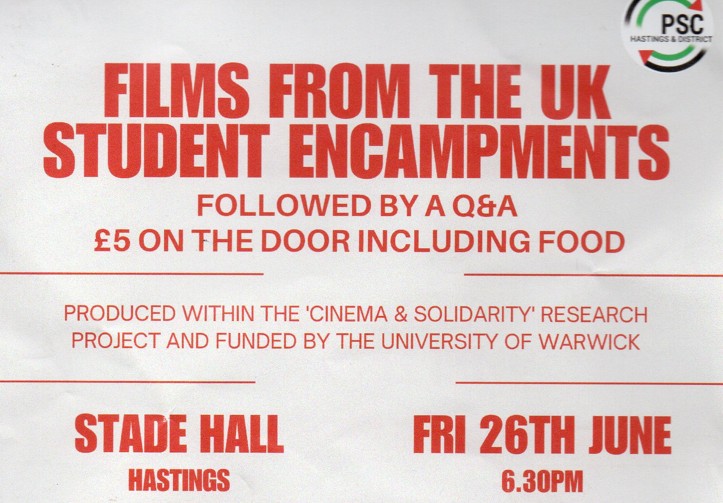
The film starts with a shot of empty grass surrounded by a tall fence.
“Create a space for people to gather, and they will do it,” says someone remembering the recent encampment.
I’m thinking about Greenham Common, about the New Age Travellers’ encampments, then about Parliament Square, how I stood and stared at that ancient gathering ground behind Boris Johnson’s fence, empty and stark, after he’d completed his war of attrition against Occupy Democracy.
I can’t make up my mind whether it’s a sad and sorry thing, or an endorsement of the value of humans that we have to come together over and over again, to learn about community and co-operation. They say humans are naturally greedy and competitive. Clara Mattei says this is an adaptation to capitalism….
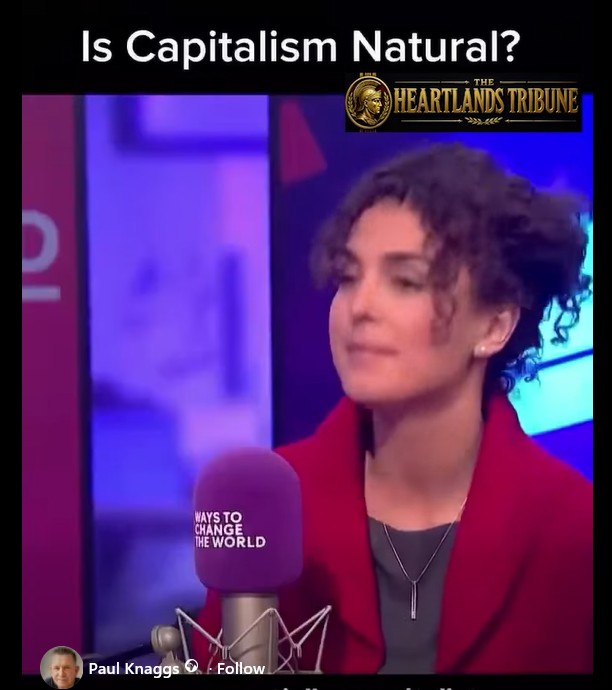
It’s certainly an adaptation we throw off joyfully when we get the chance.
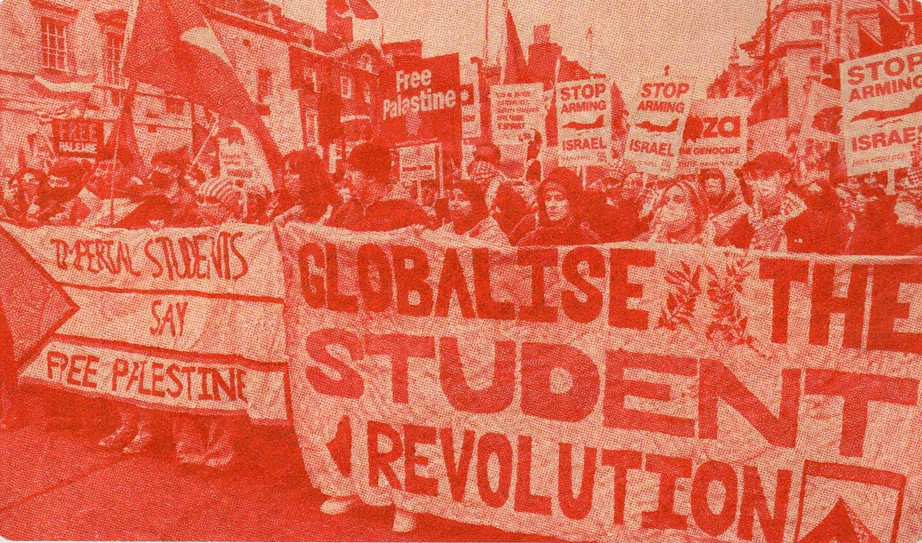
I loved hearing the reminiscences of the students from the encampments, about how they came together to put pressure on their uni to divest from Israel, to support Palestinian students, both to rebuild their education establishments in Palestine, and to come to unis elsewhere.
They say this was the least white space they’d been in at uni, and that their interactions with the town were more natural, more human, more horizontal than anything they’d seen the uni do in relations between ‘town and gown’.
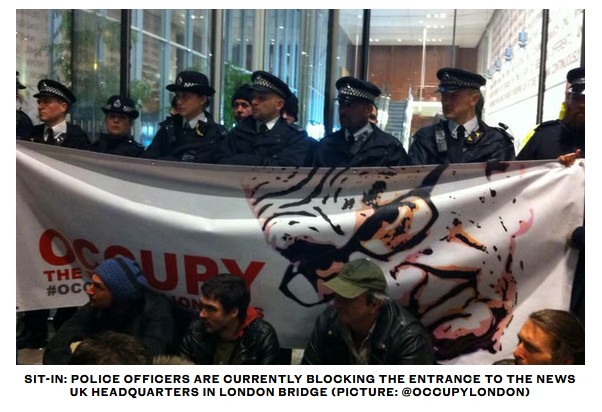
I’m reminded of a mini-encampment years ago, an off-shoot of the Occupy movement, that set up outside the News UK offices in London and, small and brief though it was, received an anonymous gift, a huge banner saying Occupy Rupert Murdoch, believed to have been made by someone who worked in those offices.
I remember seeing a video of Suella Braverman trying to talk to the encampment students. There’s a link in this Huff Post article….
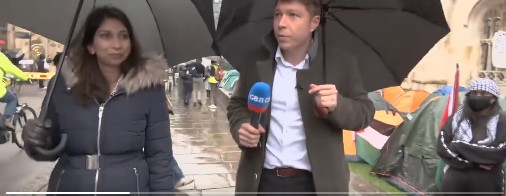
A friend remembers standing on that very green with the Women in Black 30 years ago. They too, are usually silent. They know that people like Braverman know why they are there. Faced with a bad-faith questioner, silence says it all.
They said ‘empowerment’ is for individuals, that “it’s not what I can do, it’s what we can do.”
They say they had to work out their own security – because they were attacked, and the uni did not care – they were literally beyond the pale — and it’s all so, so familiar.
Is it failure, when the uni makes a faux deal to get rid of the camp, or when Boris Johnson’s London Police and Heritage thugs whittle away the Parliament Square people’s debating space, or when hecklers walk past the Women in Black, trying to scoff at them?
I don’t think so. I think its sheer bluster, when the powers of the establishment say the actions fail, or are pointless.
“We’re creating a space for life.”
“To exist is to resist.”
“Another world is not only possible, she is on her way.”
Messages from all those encampments, messages passed on from one generation to the next, as humans come together and demonstrate to themselves and everyone else, one more time, that when humans come together, they seek the community and co-operation that are natural to humans – and the establishment panics.
Multi-culturalism
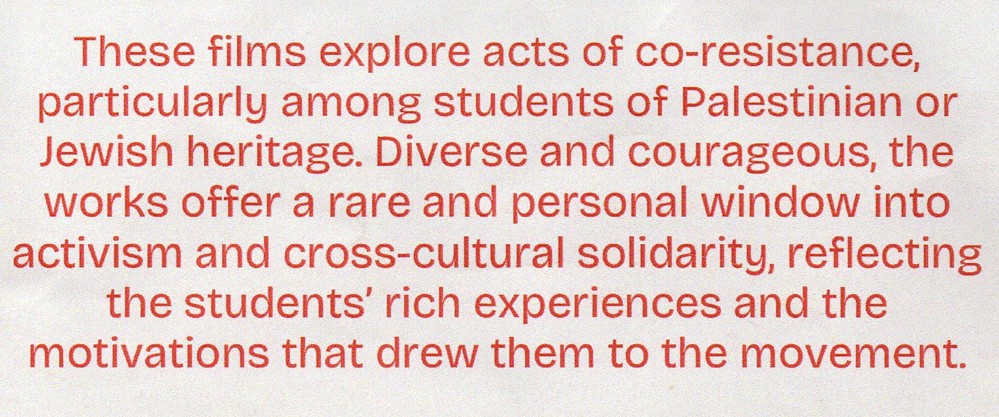
It’s a bit battered and bruised that term. It’s certainly been used to cause harm and division — but the encampment students came together to be visibly British, Palestinian, Jewish, whatever they were, to say to the world that the young do not consent to the divisive ideas being imposed on them.
Q and A
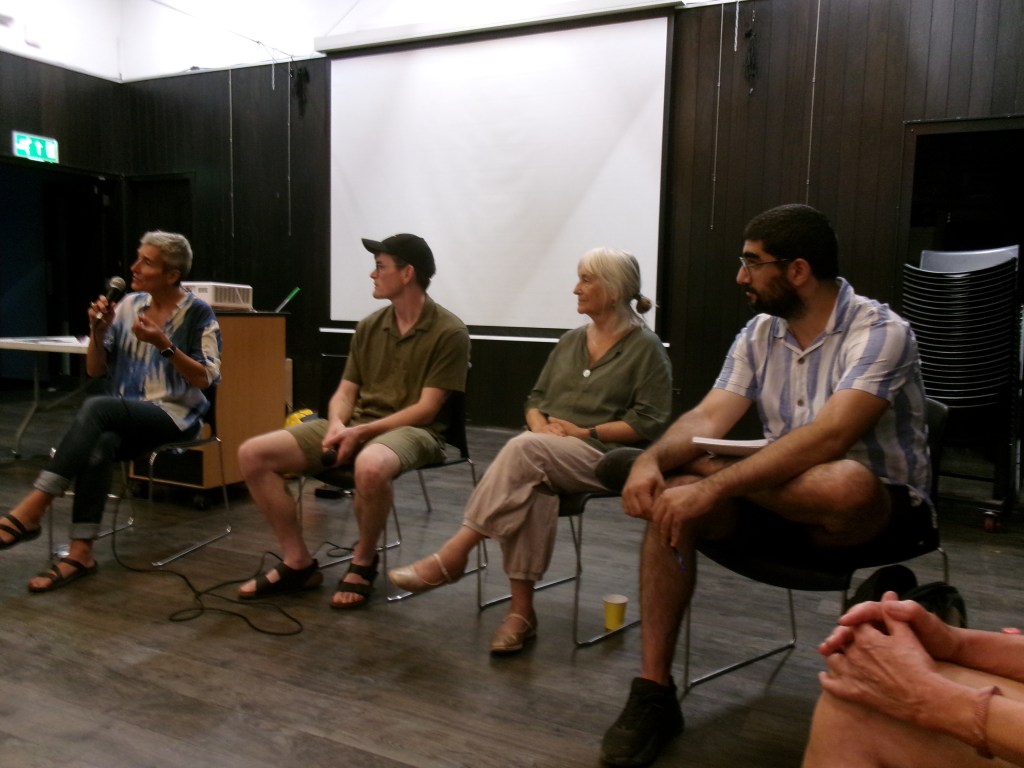
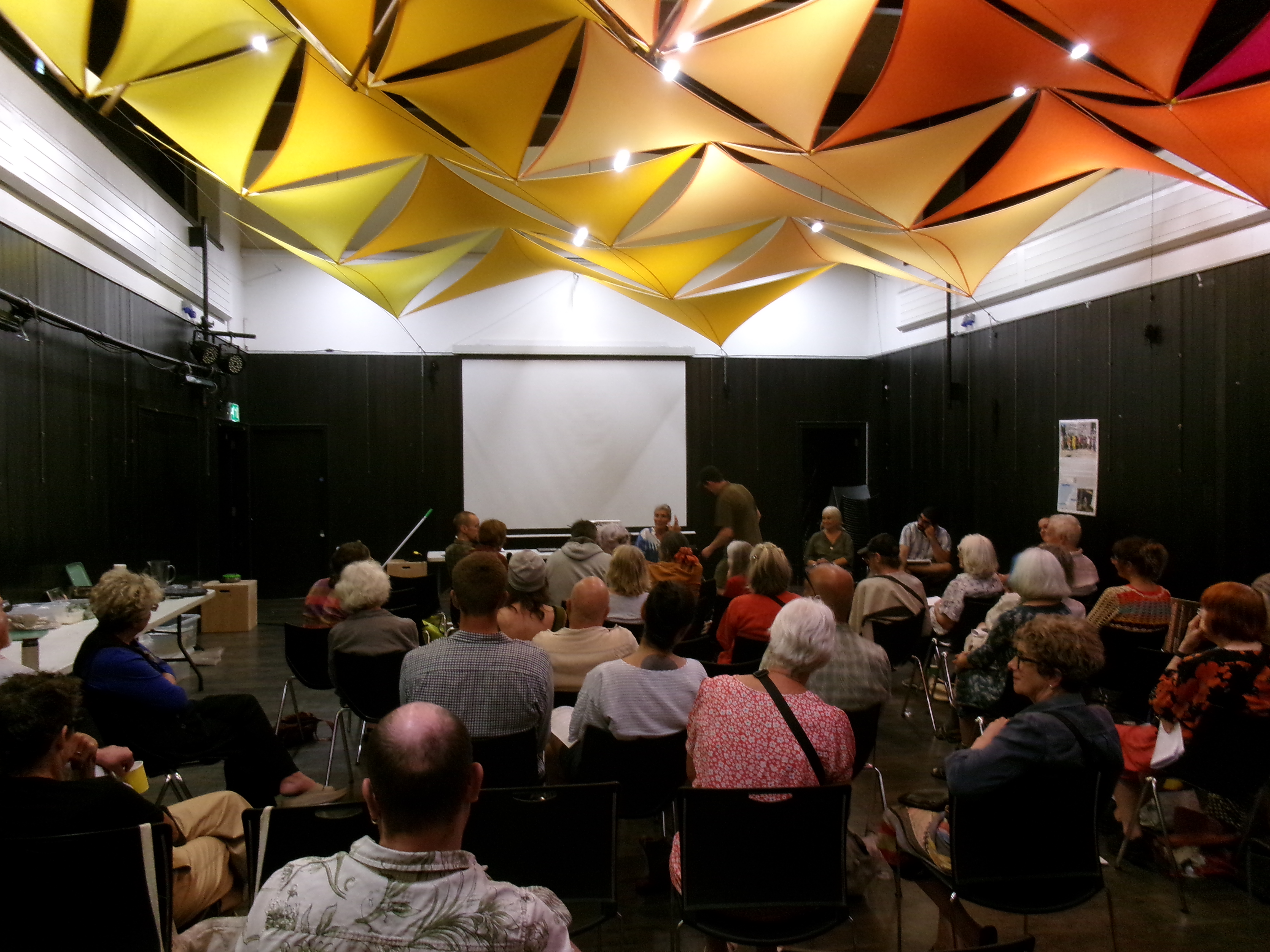
Our film night followed this pattern, and the Q and A that followed became a debate across the room with different kinds of people with different backgrounds, from British Jews to Palestinians to Irish Republicans.
Thoughts from the panel leading the debate:
He says the repression and violence inflicted on the US encampment students, and other parts of the global #FreePalestine movement, has created a backlash from people fed up of state repression and violence.
She says she thinks about what’s happening to Palestinians from when she wakes in the morning to when she sleeps. She says people of Jewish Heritage feel a sense of responsibility to speak up, to use the space that they have.
He reminds us we are living in what Gramsci called the ‘time of monsters’, when a new world is struggling to be born.
Thoughts from the floor:
When are we going to go to jail, when are we going to die for our freedom?
Right there in the room, we had responses from those holders of cardboard signs, now facing multiple charges of ‘terrorism’, and from a relative of an Irish Republican hunger-striker.
But here’s the thought I carried away with me: activists tend to talk proudly of our bruises and our losses as though they are campaign medals – we talk of the abuse and repression and push-backs we receive, and so we should – the struggle goes on, eternally, unless and until we break capitalism and its bastard children, until we scatter all those forces that depend on persuading people that people are inherently hateful and competitive – but there’s something else we should talk about. We should talk more about the joys of discovery, comradeship and sisterhood. We should talk about all the reasons we will never, ever regret finding ourselves, however briefly, in the revolutionary camp. We should talk about the permanent treasures we inherit, as soon as we stand up in those places the establishment so desperately tries to stamp on, and we should talk about the people we liberate, because they saw us, talked to us, realised they were not alone in their doubts about the establishment narrative.
Spread the joy of resistance
One of the younger members of the audience said that, watching the encampment films, she felt envy of those students who’d had that experience. That is the most important thing activists can pass on. I hope that even now, that young woman is looking for her place in the movement where she can join a march, a group-action or an encampment that has the joy, the solidarity and the learning that will be shared, passed on and rediscovered over and over, until all of humanity is free.
We gather because of heartbreak, struggle and death — but when we gather we find the healing joy of resistance. The gains are far greater than the losses, whatever happens next.
See you on the streets!
********************
Dear Reader,
Times are hard, and so the articles on this site are freely available but if you are able to support my work by making a donation, I am very grateful.
You can make one-off or monthly payments by BACS to Mrs K Green, Sort: 07 01 16, Acct No: 43287058, Reference: blog
Or via Paypal…
Click here to donate via Paypal
Another great way to support this, and other independent blogs you read, is liking and sharing on social media, signing up for email updates, or by emailing a link to friends.
Cheers,
Kay
********************

